Telecom providers manage a constant flow of billing information, customer accounts, service usage, payments, invoices, and revenue data. As a business grows, keeping track of these activities becomes more challenging. Relying on spreadsheets or reports generated at the end of each month can make it difficult to identify problems early and respond to changing business needs. This is where Real-Time Billing Reports become valuable. They give telecom providers a clearer, more up-to-date view of their billing operations, helping them understand what is happening across the business and make informed decisions without waiting for the next reporting cycle. For VoIP providers, Internet Telephony Service Providers (ITSPs), and Managed Service Providers (MSPs), timely billing information can support better financial planning, improve operational efficiency, and strengthen customer relationships. Instead of simply recording what has already happened, real-time reporting helps businesses identify trends, investigate discrepancies, and take action while the information is still relevant. Real-Time Billing Reports are reports that provide frequently updated information about billing activities, service usage, invoices, payments, and revenue. Depending on the billing platform and data processing frequency, these reports can help businesses monitor financial and operational performance as new information becomes available. For telecom providers, billing data may include call detail records (CDRs), usage charges, recurring subscriptions, one-off fees, customer invoices, payment transactions, outstanding balances, and adjustments. When this information is presented through organised dashboards and reports, business owners and finance teams can understand their current position more easily. For example, a telecom provider can review outstanding invoices, monitor payment collection, compare revenue across service categories, or identify unusual usage charges without manually combining data from multiple spreadsheets. The result is greater visibility into daily operations and a stronger foundation for business decisions. Telecom billing involves multiple processes that must work together accurately. Service usage needs to be recorded, charges must be calculated correctly, invoices need to reach customers, and payments must be tracked. When reporting is delayed, small issues can remain unnoticed until they affect cash flow, customer satisfaction, or financial results. Real-time reporting helps address this challenge in several ways. Revenue visibility is essential for understanding how a telecom business is performing. However, total revenue alone does not always reveal which services are generating the best results or where performance is declining. With Real-Time Billing Reports, providers can review revenue across customer accounts, service categories, billing periods, and other relevant business segments. For instance, an ITSP may discover that its business voice services are generating consistent revenue while another service category is experiencing slower growth. This information can help management review pricing, customer demand, and opportunities for improvement. Timely revenue information also supports more informed discussions about budgets, sales targets, and business expansion. Billing discrepancies can arise from incorrect pricing rules, incomplete usage records, duplicate entries, account configuration issues, or unexpected adjustments. If these issues remain unnoticed, they may lead to incorrect invoices, revenue leakage, and customer disputes. Telecom Billing Reports can help finance and operations teams identify unusual charges, unexpected billing movements, and inconsistencies that require investigation. For example, if a customer’s invoice is significantly higher than usual, the team can review the relevant usage records and pricing configuration before the issue becomes a lengthy dispute. Reports do not automatically eliminate every billing error, but they make it easier to spot potential problems and investigate them earlier. Cash flow is particularly important for telecom providers that manage recurring operating costs, supplier payments, service delivery expenses, and customer collections. A business may generate substantial invoices but still face financial pressure if customers regularly pay late. Real-Time Billing Analytics can help teams monitor invoices issued, payments received, overdue balances, and collection trends. This visibility allows finance teams to prioritise follow-ups and understand which accounts need attention. For example, if several business customers have overdue invoices, the collections team can identify those accounts and take appropriate action rather than waiting for a month-end review. By improving oversight of receivables, providers can make better decisions about payment follow-ups, working capital, and financial planning. Telecom providers often offer different service plans, usage-based charges, bundles, and customer-specific pricing arrangements. Choosing the right pricing structure requires a clear understanding of usage patterns, revenue performance, and customer behaviour. Real-time reporting can help management compare the performance of different plans and identify changes that deserve closer attention. For example, if a particular package attracts many customers but generates lower-than-expected revenue, the provider can investigate usage costs, included allowances, and pricing assumptions. Similarly, consistently strong performance from a service category may indicate an opportunity to develop additional packages or refine an existing offer. Billing reports provide useful evidence for these decisions, although profitability analysis should also consider network costs, supplier charges, support expenses, and other operating costs. Real-Time Billing Analytics transforms billing information into insights that businesses can use to improve their operations. Traditional reporting often focuses on historical summaries. While these reports remain useful, frequent updates can help managers recognise changes sooner. A dashboard displaying revenue, invoice totals, payments, and outstanding balances allows decision-makers to review performance throughout the billing cycle. This makes it easier to investigate unexpected changes and respond before they become larger operational problems. Customer billing information can reveal patterns that help providers manage accounts more effectively. For example, teams may identify customers with repeated payment delays, frequent invoice queries, or significant changes in service usage. These patterns can guide account reviews and more targeted customer communication. When billing teams have accurate, accessible information, they can answer customer questions more confidently and resolve issues with less manual investigation. Preparing reports manually can involve exporting information from multiple systems, checking spreadsheet formulas, reconciling figures, and formatting results for management. This process takes time and may introduce additional errors. Suitable Billing Reports Software can bring relevant information together in structured dashboards, scheduled reports, or downloadable summaries. Depending on the system, this can reduce repetitive administrative work and give employees more time to investigate issues and support customers. Automation is especially valuable for providers managing large customer bases or multiple billing models. Reliable billing data helps businesses estimate expected collections, review revenue trends, and identify potential financial pressure. For example, if reports show that overdue balances have increased over several billing periods, management can review collection procedures and update cash flow forecasts. Historical trends remain important for forecasting, but current reporting provides additional context about recent changes. Not every report is equally useful for every business. The most valuable reporting setup depends on the provider’s services, customer base, pricing models, and operational goals. However, several types of Billing Performance Reports are particularly useful. Revenue reports show how billing income changes over time and how it is distributed across services or customer groups. They can help providers identify growth opportunities, investigate unexpected declines, and compare actual results with business targets. Invoice reports help teams monitor invoices generated, invoices pending, billing adjustments, and other invoice-related activities. They can also support the investigation of missing invoices, unusual charges, or differences between expected and actual billing totals. These reports provide visibility into received payments, unpaid invoices, overdue balances, and collection progress. Finance teams can use the information to prioritise follow-ups and assess whether payment collection procedures are working effectively. Usage reports help telecom providers understand how customers consume their services. For providers handling voice traffic, CDR-related information can help explain usage charges and investigate unusual activity. Other service categories may require different usage measurements. When combined with pricing and billing information, usage reports can support package reviews and more accurate customer account management. Customer-level reports provide a clearer picture of individual account activity, including invoices, payments, balances, and billing history. These reports are useful when responding to billing enquiries, reviewing customer accounts, or identifying recurring payment issues. Exception reports highlight transactions or records that require further attention, such as incomplete usage data, unusual charges, failed billing processes, or other system-defined exceptions. Their effectiveness depends on the checks and rules configured within the billing platform. Telecom Business Intelligence involves analysing business data to understand performance, identify trends, and guide strategic decisions. Billing reports can form an important part of this process because they connect financial activity with customer accounts, services, and usage. For example, management can compare revenue trends with customer growth to determine whether the business is generating the expected income from its expanding customer base. Finance teams can examine overdue balances alongside collection history to identify areas where payment procedures need improvement. Similarly, service managers can review usage trends to understand customer demand and evaluate whether current packages remain suitable. The value comes from interpreting the information in context. A revenue increase may look positive, for example, but it should also be considered alongside service costs, outstanding payments, and customer retention. By combining billing information with other relevant operational data, providers can make decisions based on a more complete picture of business performance. Choosing the right Telecom Reporting Software can make a significant difference to the usefulness of billing information. Providers should look for capabilities that match their current requirements and expected growth. Important considerations include: Accurate data integration: Reports should draw from relevant billing, customer, usage, and payment records. Timely updates: Reporting frequency should match business needs, with clear information about any processing delays. Customisable dashboards: Users should be able to focus on the figures and metrics that matter to their responsibilities. Flexible filtering: Reports should support useful filters such as billing period, customer, service type, and account status. Exception visibility: The system should make important discrepancies or failed processes easier to investigate. Access controls: Sensitive customer and financial information should be available only to authorised users. Export and sharing options: Teams may need to download reports or share summaries with relevant stakeholders. Scalability: Reporting should remain practical as customer numbers, services, and transaction volumes increase. Providers should also confirm whether a platform supports genuine real-time updates or operates on scheduled refreshes. The distinction matters because not every billing report is updated immediately after a transaction. Telecom providers need a billing process that helps them manage customer accounts, service usage, invoices, payments, and reporting efficiently. The Bill Bot provides billing and business support capabilities for telecom and IT service providers. Its platform is designed to bring important billing activities together, helping businesses manage processes more systematically. For providers evaluating Telecom Billing Software, useful considerations include how well the platform supports billing workflows, usage processing, invoice management, payment tracking, and access to relevant business information. A connected approach can reduce the need to manage separate spreadsheets and disconnected processes. It can also help teams access the information they need to review billing activities and investigate issues. To learn more about The Bill Bot’s platform and capabilities, visit https://thebillbot.com/ and explore the features that match your business requirements. When evaluating any solution, providers should confirm the available reports, dashboard features, integrations, update frequency, and customisation options against their specific needs. Even a capable reporting system delivers limited value if teams do not use the information consistently. Telecom providers can improve reporting outcomes by following a few practical principles. Define clear performance indicators. Choose meaningful metrics, such as billed revenue, overdue invoices, collection rates, billing exceptions, and invoice accuracy. Review reports regularly. Set an appropriate review schedule for finance, operations, and management teams. Critical exceptions may require more frequent attention than routine performance summaries. Check data quality. Confirm that usage records, customer accounts, pricing rules, and payment information are accurate and consistent. Investigate unusual changes. A sudden increase in revenue or overdue balances should prompt further analysis rather than an immediate assumption about its cause. Give teams appropriate access. Make sure employees can access the reports they need while protecting sensitive customer and financial data. Turn insights into action. Assign responsibility for investigating issues, following up overdue accounts, and reviewing performance against business targets. These practices help ensure that reporting becomes part of everyday business management rather than a task performed only when problems arise. Real-Time Billing Reports help telecom providers move beyond basic invoice tracking and gain a clearer understanding of their financial and operational performance. By improving visibility into revenue, payments, customer accounts, service usage, and billing exceptions, these reports support faster investigation and more informed decision-making. For growing VoIP providers, ITSPs, and MSPs, the benefits can extend across finance, customer service, operations, and business planning. The key is to choose reporting tools that provide reliable information at the right time and to use that information consistently. When accurate billing data is combined with meaningful analysis and clear action plans, telecom providers are better equipped to manage cash flow, improve efficiency, and support sustainable growth. With the right billing processes and reporting capabilities in place, businesses can make more confident decisions as their services and customer bases expand. Real-Time Billing Reports provide frequently updated information about billing transactions, invoices, payments, revenue, usage charges, and outstanding balances. Their update frequency depends on the billing platform and data processing configuration. Billing reports help telecom providers monitor revenue, investigate discrepancies, track unpaid invoices, understand customer usage, and assess business performance. They support more informed financial and operational decisions. Real-Time Billing Analytics helps finance teams monitor payment activity, identify overdue invoices, and prioritise collection follow-ups. This can improve visibility into receivables and support better cash flow management. Useful metrics include billed revenue, invoices generated, payments received, overdue balances, collection rates, billing adjustments, service usage, and billing exceptions. The most relevant metrics depend on the provider’s business model. Telecom Reporting Software can help identify unusual charges, missing records, discrepancies, and failed processes. However, the extent of error detection depends on the platform’s validation rules, integrations, and reporting capabilities. Billing reports present billing information in an organised format, while billing analytics examines that information to identify patterns, explain changes, and support decisions. Many reporting platforms provide both capabilities. Critical billing exceptions and payment issues may need frequent monitoring, while revenue trends and broader business performance can be reviewed weekly or monthly. The appropriate schedule depends on transaction volumes, risk, and business requirements. The Bill Bot offers billing and business support capabilities designed for telecom and IT service providers. Businesses can explore its platform to assess how its billing workflows, usage processing, invoice management, payment capabilities, and reporting features align with their operational needs.What Are Real-Time Billing Reports?
Why Telecom Providers Need Real-Time Billing Reports
1. Better Visibility Into Revenue
2. Faster Identification of Billing Errors
3. Improved Cash Flow Management
4. More Informed Pricing Decisions
Key Benefits of Real-Time Billing Analytics
Monitor Business Performance More Frequently
Improve Customer Account Management
Reduce Manual Reporting Work
Support Better Financial Planning
Essential Billing Performance Reports for Telecom Providers
1. Revenue Reports
2. Invoice and Billing Reports
3. Payment and Outstanding Balance Reports
4. Service Usage Reports
5. Customer Billing Reports
6. Billing Exception Reports
How Telecom Business Intelligence Improves Decision-Making
What to Look for in Telecom Reporting Software
How The Bill Bot Can Support Better Billing Visibility
Best Practices for Getting More Value From Billing Reports
Conclusion
Frequently Asked Questions (FAQs)
1. What are Real-Time Billing Reports?
2. Why are billing reports important for telecom providers?
3. How does Real-Time Billing Analytics improve cash flow?
4. What metrics should telecom providers monitor in billing reports?
5. Can Telecom Reporting Software reduce billing errors?
6. What is the difference between billing reports and billing analytics?
7. How often should telecom providers review billing performance reports?
8. How can The Bill Bot help telecom providers manage billing?
 Book a Demo
How Real-Time Billing Reports Help Telecom Providers Make Better Decisions
Bhargav
Oct 16, 2026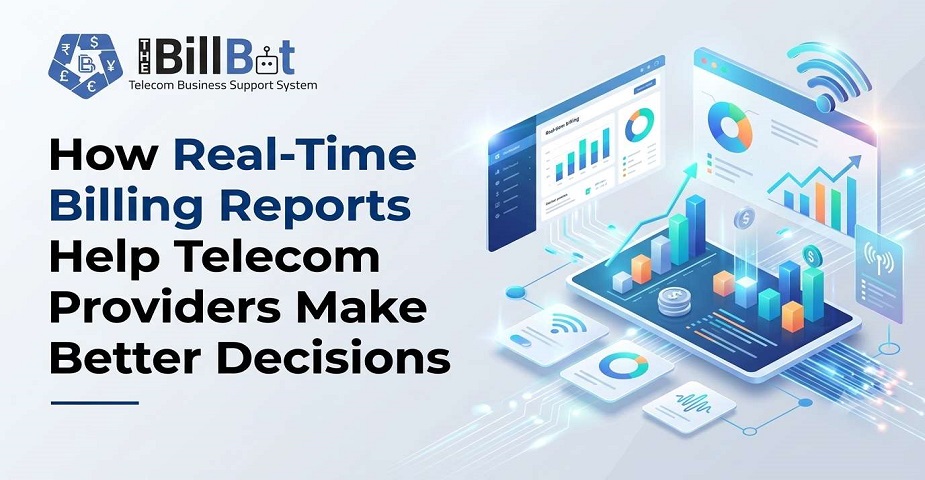
Table of Contents
- What Are Real-Time Billing Reports?
- Why Telecom Providers Need Real-Time Billing Reports
- 1. Better Visibility Into Revenue
- 2. Faster Identification of Billing Errors
- 3. Improved Cash Flow Management
- 4. More Informed Pricing Decisions
- Key Benefits of Real-Time Billing Analytics
- Monitor Business Performance More Frequently
- Improve Customer Account Management
- Reduce Manual Reporting Work
- Support Better Financial Planning
- Essential Billing Performance Reports for Telecom Providers
- 1. Revenue Reports
- 2. Invoice and Billing Reports
- 3. Payment and Outstanding Balance Reports
- 4. Service Usage Reports
- 5. Customer Billing Reports
- 6. Billing Exception Reports
- How Telecom Business Intelligence Improves Decision-Making
- What to Look for in Telecom Reporting Software
- How The Bill Bot Can Support Better Billing Visibility
- Best Practices for Getting More Value From Billing Reports
- Conclusion
- Frequently Asked Questions (FAQs)
- 1. What are Real-Time Billing Reports?
- 2. Why are billing reports important for telecom providers?
- 3. How does Real-Time Billing Analytics improve cash flow?
- 4. What metrics should telecom providers monitor in billing reports?
- 5. Can Telecom Reporting Software reduce billing errors?
- 6. What is the difference between billing reports and billing analytics?
- 7. How often should telecom providers review billing performance reports?
- 8. How can The Bill Bot help telecom providers manage billing?
Author : Bhargav
Published : 16 Oct 2026
Related Articles
Explore more insights
15 Oct 2026 / Bhargav
Telecom Payment Collection: How to Reduce Overdue Invoices
14 Oct 2026 / Bhargav
How Automated CDR Processing Simplifies Telecom Usage Billing
13 Oct 2026 / Bhargav