
Managing billing for a telecom business becomes more complicated as the customer base grows. Some customers may expect invoices at the beginning of the month, others may prefer billing based on their service activation date, and business customers may require billing schedules aligned with their contracts or internal accounting processes. Managing Telecom Billing Dates across multiple customer accounts is therefore an important part of maintaining accurate invoicing, predictable cash flow and a better customer experience. When billing dates are managed manually, businesses can face missed invoices, inconsistent billing cycles, payment delays and unnecessary administrative work. With the right billing processes and automation, telecom providers can manage different billing schedules without making their operations more complicated. Not every telecom customer follows the same billing schedule. A business may provide VoIP services, broadband connectivity, DID numbers, call plans, extensions or other subscription-based services to customers with different requirements. For example, one customer may be billed on the 1st of every month, another on the 10th, and another on the 25th. Some accounts may also have billing dates determined by their contract start date. When all these schedules are handled manually, it becomes difficult to keep track of which customer needs to be billed and when. Staff may spend considerable time reviewing spreadsheets, checking customer records and preparing invoices individually. Effective Telecom Billing Dates management helps businesses organise these schedules, reduce manual effort and ensure customers receive invoices at the right time. It also makes it easier for finance teams to plan revenue, monitor outstanding payments and maintain accurate billing records. The first step in managing different billing dates is understanding the billing requirements of every customer account. Telecom customers may have different agreements depending on the services they use, the date they joined, their selected pricing plans and their contractual terms. Applying one billing date to every account may not always be practical. Businesses should maintain clear records of: Customer account details Service activation dates Billing start dates Agreed billing dates Monthly, quarterly or annual billing frequency Recurring charges Usage-based charges Contract terms and renewal dates Payment terms and due dates Having this information readily available helps businesses establish a reliable Customer Billing Schedule. Instead of checking multiple records every time an invoice needs to be generated, billing teams can refer to a centralised system that clearly displays the billing arrangements for each customer. Although customers may have different billing dates, telecom providers should still maintain a structured approach to billing. A standardised Telecom Billing Cycle helps businesses define when recurring charges are calculated, usage records are processed, invoices are generated and payments are expected. For example, a business might follow these billing arrangements: The billing dates may differ, but the underlying process remains consistent. Each billing cycle should include clear steps for calculating charges, processing usage, generating invoices, notifying customers and tracking payments. Standardising these steps makes billing easier to manage even when hundreds or thousands of accounts have different billing dates. Managing every customer account individually can create unnecessary complexity. One practical approach is to group customer accounts according to their billing dates. Telecom providers can organise accounts into billing groups such as: Beginning-of-month billing Mid-month billing End-of-month billing Anniversary-date billing Quarterly billing Annual billing Grouping accounts makes it easier for billing teams to identify upcoming invoice runs and prepare accordingly. For example, if 300 customers are scheduled for billing on the 1st of the month, the billing team can prepare a single billing batch for those accounts rather than processing every customer separately. This approach improves visibility, reduces repetitive work and helps businesses manage workloads more efficiently. Manual billing date management becomes increasingly difficult as the number of customers increases. A growing telecom business may have hundreds of accounts with different billing arrangements, making spreadsheet-based tracking unreliable. Using Telecom Billing Software allows businesses to configure billing dates directly within customer accounts. Depending on the system's capabilities, businesses can define: Individual billing dates Billing frequency Invoice generation rules Billing cycle start and end dates Recurring charge schedules Usage charge processing Invoice due dates Automated billing notifications Once these settings are configured, the system can follow the assigned schedule without requiring staff to manually track each account. Automation helps prevent missed billing dates and reduces the risk of customers being invoiced late or incorrectly. Businesses can further improve their billing operations by implementing Custom Telecom Billing Workflows that automate recurring charges, invoice generation, billing notifications and other repetitive activities according to their requirements. Customers rarely activate telecom services on the same day. Some may start using a service at the beginning of the month, while others may join halfway through a billing period. This creates an important billing challenge: should customers be charged for a full month, or should charges be calculated according to the period during which the service was active? For example, a customer activates a VoIP service on the 18th of the month, but their regular billing date is the 1st. The business may need to calculate a prorated charge for the initial period and then include the normal recurring charge in subsequent billing cycles. An effective billing system should support the business's chosen billing rules, including: Initial billing from the activation date Prorated recurring charges Partial billing periods Service upgrades and downgrades Service suspension and reactivation Adjustments for billing changes Accurate prorated billing ensures customers are charged fairly and helps telecom providers avoid disputes caused by incorrect invoice amounts. Different customers may have different financial and operational preferences. Some businesses prefer to receive invoices at the beginning of the month because it aligns with their accounting processes. Others may prefer billing around their payroll dates or internal payment cycles. Offering Flexible Billing Dates can help telecom providers accommodate these requirements while maintaining consistent billing operations. However, flexibility should be managed carefully. Businesses should establish clear rules for changing billing dates, including when the change takes effect and how charges for the transition period are calculated. For example, if a customer requests to move their billing date from the 10th to the 20th, the provider may need to adjust the current billing period before applying the new schedule. A structured billing system can record the change, calculate any required adjustments and apply the new billing date going forward. Managing different billing dates requires more than setting up schedules. Businesses also need visibility into upcoming billing activities. Billing teams should regularly monitor: Customers scheduled for billing Upcoming invoice generation dates Failed or incomplete billing runs Accounts with missing billing information Usage records awaiting processing Billing adjustments and credit notes Customers with overdue invoices A central dashboard can help staff understand which accounts are due for billing and whether any action is required. This is particularly useful for telecom providers with a large customer base, where multiple billing batches may be processed throughout the month. Monitoring billing activity also helps identify potential issues before invoices are generated, reducing the likelihood of errors and customer complaints. One common billing mistake is treating invoice generation dates and payment due dates as the same thing. A billing date determines when an invoice is created, while the payment due date determines when the customer is expected to pay. For example, a customer may be billed on the 5th of every month but have a payment term of 14 days. Their payment due date would therefore fall later than the invoice date. Telecom providers should maintain clear rules for: Invoice generation dates Payment due dates Credit terms Late payment reminders Payment grace periods Account suspension policies Separating these dates helps businesses manage receivables more accurately. It also ensures that payment reminders are sent at the appropriate time rather than being triggered simply because an invoice has been generated. An Automated Billing Cycle can significantly reduce the administrative workload involved in managing customer accounts with different billing dates. Instead of manually checking customer schedules and preparing invoices, businesses can configure automated billing rules to process accounts according to their assigned dates. Automation can support several activities, including: Identifying customers due for billing Calculating recurring service charges Processing usage-based charges Applying applicable discounts Generating invoices Sending invoice notifications Updating billing records Triggering payment reminders Automating these activities helps maintain consistency across billing batches. It also reduces dependency on manual spreadsheets and repetitive administrative tasks. For telecom providers, automation becomes particularly valuable when the business grows and billing activities increase across multiple services, customers and pricing plans. Accurate customer information is essential for effective billing date management. If customer account records contain incorrect billing dates, outdated service information or incomplete pricing details, even an automated billing system may generate incorrect invoices. Businesses should regularly review their Customer Billing Accounts and ensure that important details are up to date. This includes verifying customer contact information, billing addresses, active services, recurring charges, billing preferences, payment terms and account status. Regular account reviews help identify inconsistencies before the next billing run. They also provide an opportunity to update billing arrangements when customers add new services, change packages or renew contracts. Maintaining accurate records supports smoother billing operations and reduces the time spent resolving invoice-related queries. When selecting billing technology, telecom providers should consider whether the software can accommodate different billing dates without creating additional operational complexity. The right Telecom Billing Software should provide flexibility while maintaining a consistent billing process. Important capabilities to look for include: Multiple billing cycles Customer-specific billing dates Recurring and usage-based billing Automated invoice generation CDR processing and usage calculation Prorated billing Billing adjustments Payment tracking Automated reminders Billing reports and dashboards Customer account management A system that supports these capabilities allows telecom businesses to manage different billing schedules from one platform. It also helps finance and operations teams work with the same billing information, improving coordination between departments and reducing the risk of inconsistent records. Managing Telecom Billing Dates properly can deliver several operational and financial benefits. When billing schedules are organised, businesses can better understand when invoices will be issued and when payments are expected. This supports cash flow forecasting and financial planning. Automated billing schedules eliminate the need to manually track every customer billing date. Staff can focus on account management, customer support and other business activities. Structured billing processes reduce the likelihood of missed invoices, incorrect charges, duplicate billing and billing date inconsistencies. Customers receive invoices according to agreed schedules. Predictable billing helps them manage their own budgets and reduces confusion about invoice dates and payment expectations. As telecom businesses grow, they can onboard new customers with different billing requirements without creating a completely new manual process for every account. Consistent billing data helps businesses analyse revenue, monitor outstanding payments, identify billing trends and make more informed decisions. Managing different billing dates across telecom customer accounts is a challenge that becomes more demanding as a business grows. Different service activation dates, customer preferences, contract terms and payment arrangements can make billing operations complicated without a structured process. The key is to establish a clear billing framework, maintain accurate customer account information, group customers according to their billing schedules and automate invoice generation wherever possible. With the right approach to Telecom Billing Dates, telecom providers can improve billing accuracy, reduce administrative effort, maintain predictable invoicing schedules and deliver a more reliable customer experience. By adopting flexible billing processes and using capable billing software, businesses can manage multiple billing cycles more efficiently while supporting long-term growth. Telecom billing dates are the scheduled dates on which telecom providers generate invoices for customers. These dates may be based on a fixed calendar date, service activation date, billing anniversary or a customer-specific arrangement. Customers may have different billing dates because they joined the business at different times, selected different billing arrangements, signed contracts with specific terms or requested billing schedules that suit their financial processes. Businesses can manage different billing dates by maintaining centralised customer billing records, grouping accounts by billing schedule, standardising billing processes and automating invoice generation through billing software. Yes. Telecom billing software with flexible billing configuration can support multiple billing dates, monthly or annual billing frequencies, recurring charges, usage-based charges and customer-specific billing schedules, depending on its features. A billing date is when an invoice is generated, whereas a payment due date is the deadline for the customer to pay that invoice. Payment due dates are generally determined by the agreed payment terms. Automated billing identifies accounts scheduled for billing, calculates applicable charges, generates invoices and can trigger notifications or payment reminders. It reduces manual tracking and improves consistency. Yes. A telecom business can change a customer's billing date if its policies and contractual arrangements permit it. The change should be recorded properly, and any prorated charges or adjustments should be calculated before applying the new billing schedule. A customer billing schedule is a record of when a customer is expected to be billed, how frequently invoices are generated, what services or charges are included and when payments are due. Flexible billing dates help telecom businesses accommodate different customer requirements, improve customer satisfaction, simplify billing arrangements and provide greater flexibility in managing recurring revenue. Consistent billing schedules help businesses issue invoices on time, reduce delays in invoice generation, follow up on outstanding payments promptly and gain better visibility into expected revenue.Why Telecom Businesses Need to Manage Different Billing Dates
1. Understand Each Customer's Billing Requirements
2. Create a Standardised Telecom Billing Cycle
3. Group Customer Accounts by Billing Date
4. Automate Billing Date Configuration
5. Manage Service Activation Dates and Prorated Charges
6. Allow Flexible Billing Dates for Different Customers
7. Monitor Billing Runs and Upcoming Invoices
8. Separate Billing Dates from Payment Due Dates
9. Use Automated Billing Cycles to Reduce Errors
10. Maintain Accurate Customer Billing Accounts
11. Choose Telecom Billing Software That Supports Multiple Billing Schedules
Benefits of Effective Telecom Billing Date Management
Improved Cash Flow Visibility
Reduced Administrative Work
Fewer Billing Errors
Better Customer Experience
Greater Scalability
Better Financial Reporting
Conclusion
Frequently Asked Questions (FAQ)
1. What are telecom billing dates?
2. Why do telecom customers have different billing dates?
3. How can telecom businesses manage different billing dates efficiently?
4. Can telecom billing software support multiple billing cycles?
5. What is the difference between a billing date and a payment due date?
6. How does automated billing help manage different billing dates?
7. Can a telecom business change a customer's billing date?
8. What is a customer billing schedule?
9. What are the benefits of flexible billing dates?
10. How can billing date management improve cash flow?
How to Manage Different Billing Dates Across Telecom Customer Accounts
Bhargav
Nov 23, 2026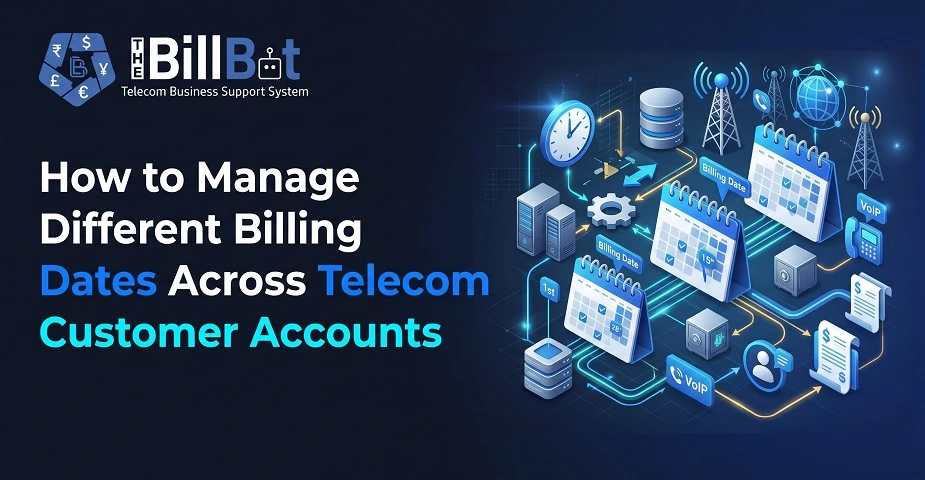
Table of Contents
- Why Telecom Businesses Need to Manage Different Billing Dates
- 1. Understand Each Customer's Billing Requirements
- 2. Create a Standardised Telecom Billing Cycle
- 3. Group Customer Accounts by Billing Date
- 4. Automate Billing Date Configuration
- 5. Manage Service Activation Dates and Prorated Charges
- 6. Allow Flexible Billing Dates for Different Customers
- 7. Monitor Billing Runs and Upcoming Invoices
- 8. Separate Billing Dates from Payment Due Dates
- 9. Use Automated Billing Cycles to Reduce Errors
- 10. Maintain Accurate Customer Billing Accounts
- 11. Choose Telecom Billing Software That Supports Multiple Billing Schedules
- Benefits of Effective Telecom Billing Date Management
- Improved Cash Flow Visibility
- Reduced Administrative Work
- Fewer Billing Errors
- Better Customer Experience
- Greater Scalability
- Better Financial Reporting
- Conclusion
- Frequently Asked Questions (FAQ)
- 1. What are telecom billing dates?
- 2. Why do telecom customers have different billing dates?
- 3. How can telecom businesses manage different billing dates efficiently?
- 4. Can telecom billing software support multiple billing cycles?
- 5. What is the difference between a billing date and a payment due date?
- 6. How does automated billing help manage different billing dates?
- 7. Can a telecom business change a customer's billing date?
- 8. What is a customer billing schedule?
- 9. What are the benefits of flexible billing dates?
- 10. How can billing date management improve cash flow?
Author : Bhargav
Published : 23 Nov 2026
Related Articles
Explore more insights
21 Nov 2026 / Bhargav
Supplier Rate Management: How Telecom Providers Keep Rates Updated
20 Nov 2026 / Bhargav
How Customer Self-Care Helps Customers Manage Invoices and Call Records
19 Nov 2026 / Bhargav