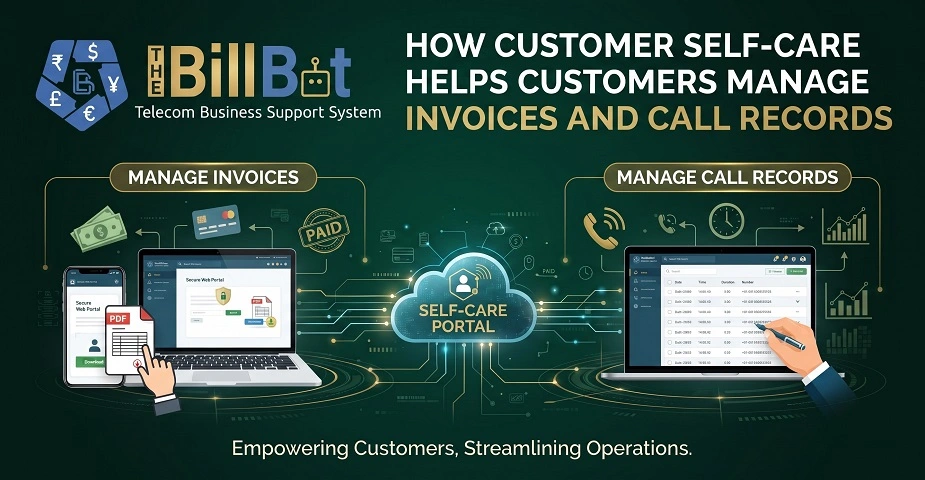
A Customer Self-Care Portal gives telecom customers greater control over their accounts by allowing them to access invoices, review call records, monitor usage and manage important account information without contacting customer support for every request.
For telecom businesses, including Internet Telephony Service Providers (ITSPs), VoIP providers and Managed Service Providers (MSPs), providing a smooth customer experience is just as important as delivering reliable services. Customers expect quick access to billing information, transparent usage details and convenient account management.
Traditionally, customers had to contact support teams to request invoices, check call details, understand billing amounts or resolve account-related questions. These manual processes often created unnecessary delays and increased the workload for customer service teams.
A well-designed customer self-care solution changes this experience. It brings essential account information together in one accessible platform, allowing customers to find what they need whenever they need it.
In this blog, we explore how a Customer Self-Care Portal helps customers manage invoices and call records, improves billing transparency and supports more efficient telecom business operations.
What Is a Customer Self-Care Portal?
A Customer Self-Care Portal is an online platform that allows customers to independently access and manage their service-related information. Instead of depending entirely on customer support, users can log in to their accounts and perform common activities through a centralised interface.
For telecom providers, this portal acts as a connection between the business and its customers. It provides access to billing information, invoices, call records, service details and other account-related features.
Depending on the platform's capabilities, customers may be able to:
View current and previous invoices.
Download invoices for accounting purposes.
Check outstanding payments.
Review call detail records (CDRs).
Monitor call usage and service activity.
Access account and subscription information.
Update selected personal or business details.
Raise support requests when assistance is required.
A Customer Self-Care Portal makes everyday account management more convenient while reducing the need for repetitive communication between customers and support teams.
Why Telecom Customers Need Self-Service Access
Telecom customers regularly need information about their services and billing activities. Business customers, in particular, may need to review multiple invoices, check usage patterns and verify call records as part of their regular financial processes.
Without a centralised self-service solution, even simple requests can become time-consuming.
For example, a customer who wants to download an old invoice may need to send an email and wait for the billing team to respond. Similarly, checking specific call activity may require a support request.
These small interactions can create a significant workload when a telecom provider manages hundreds or thousands of customers.
A Customer Self-Care Portal addresses these challenges by making relevant information available directly to customers.
The benefits include:
Convenient access: Customers can retrieve account information without waiting for support.
Better transparency: Clear invoice and call record information helps customers understand their usage.
Faster communication: Fewer routine enquiries need to be handled manually.
Improved customer experience: Customers have greater control over everyday account activities.
Operational efficiency: Support teams can spend more time resolving complex customer issues.
How a Customer Self-Care Portal Simplifies Invoice Management
Invoice management is one of the most important functions of a telecom customer portal. Customers need accurate billing information to understand service charges, monitor expenses and maintain financial records.
A centralised portal makes this process easier in several ways.
1. Easy Access to Current and Previous Invoices
Customers should not have to contact the billing department every time they need an invoice.
With a Customer Self-Care Portal, they can access available current and historical invoices directly from their accounts. This is particularly useful for businesses that maintain monthly financial records or need invoices for internal reporting.
A well-designed Built-In Customer Portal allows customers to access their current and previous invoices, download call data, check payment history and manage routine billing activities without contacting support.
Having invoices organised in one place makes it easier to retrieve billing documents whenever required.
2. Downloadable Invoices for Accounting
Customers often need invoice copies for bookkeeping, expense tracking and financial reporting.
A Customer Billing Portal can allow users to download available invoices in a convenient format, such as PDF. This reduces administrative effort and helps businesses maintain organised financial documentation.
It also makes the billing process more practical for customers who manage multiple telecom services.
3. Better Visibility into Outstanding Payments
Unclear payment information can lead to unnecessary confusion between customers and service providers.
Online Invoice Management allows customers to check their outstanding balances and identify invoices that still require payment.
When payment status is clearly displayed, customers can understand their financial position and take appropriate action.
If supported by the platform, online payment options can make settling outstanding invoices even more convenient.
4. Improved Billing Transparency
Customers want to understand what they are paying for.
A well-organised invoice should provide clear information about service charges, recurring fees, usage-based charges, adjustments and applicable taxes.
Through Telecom Invoice Management, customers can review billing details without relying on support teams to explain every transaction.
Greater visibility helps reduce misunderstandings and creates a more transparent relationship between telecom providers and their customers.
5. Easier Monthly Billing Management
For businesses using telecom services regularly, reviewing invoices is a recurring responsibility.
A self-service portal provides a consistent place to access billing documents across different billing periods. Customers can compare previous invoices, review changes in charges and maintain their financial records.
This makes monthly account management more organised and predictable.
How Customers Can Manage Call Records Through a Self-Service Portal
Invoices explain the amount charged, but call records help customers understand the activity behind those charges.
For VoIP providers and ITSPs, Call Record Management is particularly important because customers may need to review call activity, investigate unexpected charges and monitor communication usage.
A Customer Self-Care Portal can make this information easier to access.
1. Access to Call Detail Records (CDRs)
Call Detail Records contain information about individual calls processed through a telecom system.
Depending on the service and portal configuration, records may include:
Calling and called numbers.
Call date and time.
Call duration.
Call destination.
Call status.
Applicable call charges.
By providing access to available CDR information, telecom providers help customers understand their calling activity without submitting repeated requests to support teams.
2. Review Online Call Records
Customers may need to check calls made during a particular day, week or billing period.
Online Call Records allow users to review available call activity through their accounts. Instead of requesting reports from the service provider, customers can independently examine the information provided by the portal.
This is especially useful for businesses that want to maintain better visibility over their communication expenses.
3. Identify Unexpected Call Charges
Unexpected billing amounts can sometimes result from higher usage, international calls, premium destinations or changes in calling patterns.
When customers can review their call records alongside invoice details, it becomes easier to understand where particular charges may have originated.
This visibility can help customers identify unusual activity and contact support with more specific questions when necessary.
4. Monitor Call Usage and Activity
Regularly reviewing call activity can help businesses understand their communication requirements.
For example, a company may notice that its international calling usage has increased over a particular period. With access to relevant call records, the business can investigate the change and review whether its current calling plans remain suitable.
Telecom Customer Self-Service therefore supports better awareness of communication usage.
5. Reduce Manual Requests for Call Reports
Without self-service access, customers may regularly ask support teams to provide call reports or investigate individual records.
A portal that provides suitable CDR access reduces the need for these repetitive requests.
Support teams can then focus on more complex billing questions, technical issues and customer requirements.
The Role of Customer Self-Care Software in Improving Customer Experience
Customer Self-Care Software is not simply a place to display invoices and call records. It can become an important part of the overall customer experience.
When essential information is easy to find, customers feel more confident managing their services.
Here are some important ways self-care software can improve customer relationships.
1. 24/7 Access to Account Information
Customers do not always need billing information during normal business hours.
A self-service portal can provide access to available account information around the clock, allowing customers to check invoices or review call activity at a convenient time.
This flexibility is particularly valuable for businesses operating across different working schedules.
2. Greater Customer Independence
Customers appreciate being able to complete routine activities without depending on another person.
Whether they want to download an invoice, review a call record or check an outstanding balance, self-service access gives them more control over their accounts.
This independence can improve overall satisfaction.
3. Fewer Repetitive Support Enquiries
Many customer support requests involve basic information that customers could access themselves.
By making relevant details available through a Telecom Customer Portal, providers can reduce routine enquiries related to invoices, payments and call records.
This allows customer service teams to use their time more effectively.
4. More Consistent Customer Communication
A centralised portal gives customers a consistent place to access their information.
Instead of receiving different documents through multiple communication channels, customers can use one platform to find available billing and account details.
This creates a more organised service experience.
Important Features to Look for in a Customer Self-Service Portal
Not every portal provides the same functionality. Telecom providers should consider the features that will make everyday account management easier for their customers.
Some important capabilities include:
The right combination of features depends on the provider's services, customer requirements and business processes.
How a Customer Self-Care Portal Benefits Telecom Providers
Although self-service portals are designed to make life easier for customers, they also offer significant operational benefits to telecom businesses.
Reduced Customer Support Workload
When customers can access their invoices and call records independently, support teams receive fewer basic information requests.
This reduces repetitive administrative work and allows employees to focus on more important customer issues.
Improved Billing Transparency
Providing customers with access to invoice details and call activity helps establish clearer communication around billing.
When customers can review available information themselves, there may be fewer misunderstandings about service charges.
Better Customer Retention
A convenient customer experience can contribute to stronger customer relationships.
When customers can easily access important account information and manage routine activities, they are more likely to view the provider as organised and customer-focused.
Greater Operational Scalability
As a telecom business grows, the number of customer enquiries can increase.
Handling every request manually becomes difficult as the customer base expands. Self-service functionality helps providers support more customers without increasing routine administrative work at the same rate.
More Efficient Account Management
A centralised customer portal brings essential account information together. This supports more organised interactions between customers and telecom providers.
How The Bill Bot Supports Smarter Telecom Customer Management
Managing customer information, billing activities and telecom operations through disconnected systems can create unnecessary complexity for service providers.
The Bill Bot provides a Business Support System (BSS) designed to help VoIP providers, ITSPs and MSPs manage important business processes through a unified platform.
With capabilities covering customer management, billing, invoicing, payments, reporting and integrations, The Bill Bot helps telecom businesses bring essential operational activities together.
A well-connected business support environment can also make customer-facing processes more organised by connecting billing and account information with the wider business workflow.
For telecom providers looking to improve customer experience, combining efficient billing operations with accessible customer self-service functionality can be an important step towards building a more scalable business.
The goal is not simply to automate individual tasks. It is to create a smoother experience for both customers and internal teams.
Best Practices for Implementing a Customer Self-Care Portal
Introducing a portal requires more than providing customers with login credentials. Providers should ensure that the platform is useful, secure and easy to navigate.
Consider these best practices:
Keep the interface simple: Make invoices, call records and account information easy to find.
Prioritise data accuracy: Ensure that billing and usage information is consistent with the underlying systems.
Protect customer information: Use appropriate authentication, access permissions and security controls.
Organise billing history: Make previous invoices and relevant records easy to retrieve.
Provide clear information: Use understandable labels and billing descriptions.
Offer support options: Give customers a way to request assistance when self-service is insufficient.
Review customer feedback: Identify areas where customers experience difficulties and improve the portal accordingly.
A customer-focused implementation can make self-service a valuable part of the overall telecom service experience.
Conclusion
A Customer Self-Care Portal plays an important role in simplifying how telecom customers manage invoices, review call records and access account information.
By bringing essential information into one accessible platform, providers can reduce repetitive support requests, improve billing transparency and give customers greater independence.
Features such as invoice downloads, payment information, CDR access and account management make everyday activities more convenient while helping telecom businesses operate more efficiently.
For VoIP providers, ITSPs and MSPs, investing in better customer self-service is not just about improving convenience. It is about building stronger customer relationships and creating an operational foundation that can support long-term business growth.
As customer expectations continue to evolve, telecom providers that make account management simpler and more transparent will be better positioned to deliver a positive customer experience.
Frequently Asked Questions (FAQs)
1. What is a Customer Self-Care Portal in telecom?
A Customer Self-Care Portal is an online platform that allows telecom customers to access invoices, review call records, check payment information and manage available account details without contacting customer support for every request.
2. How does a Customer Self-Care Portal help with invoice management?
It allows customers to view current and previous invoices, download billing documents, check outstanding balances and review billing information through a centralised platform.
3. Can customers access call detail records through a self-service portal?
Yes. If the provider enables this functionality, customers can access available Call Detail Records (CDRs) to review information such as call dates, durations, destinations and applicable charges.
4. What is the difference between a Customer Self-Care Portal and a Customer Billing Portal?
A Customer Billing Portal mainly focuses on invoices, payment information and billing history. A Customer Self-Care Portal can provide broader functionality, including billing, call records, usage information and account management.
5. How does Customer Self-Care Software reduce support workload?
It allows customers to complete routine activities independently, such as downloading invoices and reviewing call records. This reduces repetitive enquiries and gives support teams more time to handle complex issues.
6. Is a Customer Self-Care Portal useful for VoIP providers?
Yes. VoIP providers can use customer self-service functionality to give customers convenient access to billing information, call records and usage details, helping improve transparency and customer experience.
7. Why is Call Record Management important for telecom customers?
Call Record Management helps customers understand their communication activity, review call charges, identify unexpected usage and maintain better visibility over telecom expenses.
8. What features should a good Telecom Customer Portal include?
Important features include invoice access, downloadable billing documents, payment status, call detail records, usage information, account management, secure login and customer support access.