
Telecom businesses often serve customers with very different requirements. A small business using a few VoIP lines may need a simple invoice with a clear monthly charge, while a large enterprise customer may expect detailed service breakdowns, department-wise costs, usage records, contract references and multiple billing accounts. Sending the same invoice format to every customer can make billing less transparent and create unnecessary questions for finance teams. This is where Telecom Invoice Templates become important. Customising invoice layouts allows telecom providers, ITSPs, VoIP providers and MSPs to present billing information in a way that suits each customer segment. A well-designed invoice does more than display an amount due. It helps customers understand what they are paying for, review their services, verify usage and make payments on time. With flexible invoice customisation, telecom businesses can improve the billing experience, reduce invoice-related queries and maintain a more professional relationship with their customers. In this guide, we will explore how businesses can customise telecom invoice templates for different customer segments and why the right invoice design matters. Telecom Invoice Templates are structured invoice formats used by telecommunications businesses to present customer charges, service details, billing periods, taxes, payment information and other relevant billing data. These templates help businesses maintain consistency across invoices while making it easier to adapt billing information according to different customer requirements. A standard invoice template may include the customer's name, account number, invoice number, billing period, service description, recurring charges, usage-based charges, taxes, adjustments and payment terms. However, not every customer needs the same level of detail or the same presentation. For example, a residential VoIP customer may prefer a straightforward invoice showing their monthly plan, additional usage and total amount due. An enterprise customer may need invoices separated by departments, locations, service types or individual accounts. With flexible telecom invoice templates, businesses can create different invoice formats while maintaining accurate billing records and consistent invoice generation processes. As telecom businesses grow, their customer base becomes more diverse. Different customers may have different billing arrangements, service packages, payment terms and reporting expectations. A single invoice layout may not adequately support these differences. Custom invoice templates help businesses address these requirements without unnecessarily complicating their billing operations. Customers should be able to understand their invoices without contacting the billing team for explanations. A clear invoice separates recurring charges, usage charges, additional services, discounts, taxes and outstanding balances. When billing information is organised properly, customers can quickly identify what they are paying for and verify the charges against their subscribed services. Telecom providers may offer monthly subscriptions, usage-based services, bundled packages, one-time charges and additional features. Each customer may use a different combination of these services. Custom Telecom Invoice Templates allow providers to display the relevant charges in a format that matches each customer's billing arrangement. Invoices are an important part of customer communication. A consistent invoice design containing the company logo, business details, contact information and professional formatting helps reinforce brand identity. A professionally designed invoice also makes the billing experience feel more organised and reliable. Confusing invoices often result in customers contacting support to understand individual charges, billing periods or payment amounts. Well-structured invoice layouts can reduce these unnecessary queries by displaying important information clearly and providing sufficient detail about billed services. A personalised invoice can make customers feel that their specific requirements are being considered. Whether they need a summary of monthly charges or a detailed breakdown of multiple services, the invoice should be designed to make billing information accessible. A better billing experience can support customer satisfaction and help telecom businesses maintain stronger relationships. Before customising invoice templates, telecom businesses should understand the different customer segments they serve. Each segment may have its own expectations regarding invoice presentation, billing details and payment information. Residential customers generally prefer simple and easy-to-understand invoices. They may subscribe to broadband, VoIP services, phone plans, extensions or other communication services. Their invoices should focus on: Monthly subscription charges Additional usage charges One-time fees Discounts and promotional offers Tax details Total amount payable Payment due date Avoid overcrowding residential invoices with unnecessary technical information. The goal is to provide a clear summary of the services and charges. SMBs may have multiple users, phone extensions, broadband connections, business numbers and communication packages. They often need more billing information than individual customers but may not require the extensive breakdowns used by large enterprises. Their invoice templates may include: Service-wise billing summaries Monthly recurring charges Usage-based charges Additional service fees Account-level totals Payment terms Previous outstanding balances A well-organised invoice allows small businesses to review their telecom expenses without spending too much time analysing billing information. Enterprise customers frequently have complex billing arrangements involving multiple departments, locations, accounts, services and contracts. Their invoice requirements may include detailed billing summaries and structured financial reporting. Enterprise-focused templates may display: Department-wise charges Location-wise billing Account and contract references Multiple service categories Detailed usage information Separate recurring and non-recurring charges Purchase order numbers Tax breakdowns Consolidated totals For these customers, the ability to customise invoice formatting is particularly valuable because it helps finance teams reconcile telecom expenses with their internal accounting processes. Wholesale telecom providers and resellers may purchase services from suppliers and resell them to their own customers. Their billing requirements can include wholesale costs, resale charges, service quantities, rate information and agreed pricing structures. Invoices for this segment may need to include: Service quantities Wholesale or reseller service descriptions Agreed billing rates Recurring charges Usage charges Account references Billing period details Applicable adjustments The invoice layout should present the information relevant to the commercial arrangement without exposing confidential internal cost information unnecessarily. Customisation should be based on actual customer billing requirements rather than adding unnecessary design elements. The following steps can help telecom businesses build practical and effective invoice templates. Start by reviewing the different types of customers your business serves. Understand their services, billing arrangements, payment terms and expectations regarding invoice details. For example, residential customers may require simple invoices, SMBs may need service-level breakdowns, and enterprise accounts may require department or location-based billing. Gathering these requirements before designing templates helps businesses create invoice formats that serve a real purpose. Instead of maintaining one invoice design for every customer, consider developing different layouts for major customer segments. You may create: A simple invoice template for residential customers A business invoice template for SMB customers A detailed invoice template for enterprise accounts A reseller invoice template for wholesale customers These Customer-Specific Invoice Templates can share common billing fields while displaying different information according to the customer's needs. Different customers may require different invoice fields. Customising these fields helps ensure that invoices contain the information necessary for payment, reconciliation and record keeping. Common invoice fields include: Customer name and billing address Customer account number Invoice number Invoice issue date Billing period Contract reference Purchase order number Service descriptions Quantity and unit rates Recurring charges Usage charges Discounts and adjustments Taxes Total amount due Payment instructions For enterprise accounts, additional fields such as department codes, location references or internal cost centres may be useful. Telecom invoices can contain several types of charges. If these charges are presented without proper organisation, customers may find it difficult to understand the invoice. Consider separating charges into logical categories such as: Monthly subscription charges Usage-based charges One-time setup fees Additional service charges Equipment charges Discounts Adjustments Taxes This approach improves Telecom Invoice Formatting and makes invoices easier to review. Customers can identify the services contributing to their total bill without having to examine every line individually. Customisation is not limited to billing information. Businesses can also adapt invoice design elements to maintain a professional appearance. Telecom Invoice Design may include: Company logo Brand colours Company address and contact details Customer information section Invoice summary Clear tables for service charges Payment instructions Terms and conditions Customer support information Telecom providers can use Custom Invoice Templates to personalise invoice layouts, logos, brand colours, billing details and line-item grouping according to their business requirements. Maintain consistency across templates so that every invoice looks like it belongs to the same business, even when the layout differs between customer segments. Customers may have different billing dates, payment terms and invoice frequencies depending on their contracts. Some customers may receive monthly invoices, while others may have different billing schedules or account arrangements. Templates should be able to display the correct billing period, invoice date, payment due date and applicable payment terms. This is particularly useful for providers managing a large number of customers with different billing arrangements. Usage-based telecom services can generate a significant amount of billing data. However, not every customer needs every usage record displayed directly on the invoice. For individual and SMB customers, a summary of usage and charges may be sufficient. Enterprise customers may need additional breakdowns by service, department, location or account. Customised Telecom Invoices should display relevant usage information in a clear and organised way, with more detailed records available separately when required. Once different templates have been created, businesses should avoid manually selecting an invoice format every time an invoice is generated. Billing automation can assign templates according to customer type, account configuration, billing preferences, service categories or other defined rules. For example, an enterprise account may automatically use a detailed invoice template, while a residential customer receives a simplified version. This helps reduce manual work and supports consistency across billing operations. Before introducing new invoice formats, test them using real-world billing scenarios. Check whether: All customer details appear correctly. Billing periods and dates are accurate. Recurring and usage charges are displayed properly. Taxes and totals are calculated correctly. Discounts and adjustments are clearly presented. Invoice layouts work for different service combinations. Long service descriptions do not disrupt formatting. Payment details are easy to find. PDF invoices remain readable on different devices. Testing helps identify design or billing issues before customers receive the invoices. An effective invoice template should balance flexibility, readability and accurate billing information. While different customers may require different invoice formats, certain features should remain consistent across all templates. Businesses should be able to modify invoice sections, reorder information, add relevant fields and adjust the presentation of billing data. This flexibility makes Telecom Billing Templates suitable for customers with different requirements. Customisation should never compromise billing accuracy. Invoice templates should use correctly calculated charges, customer details, billing periods, taxes and payment information from the billing system. Every charge should have a meaningful description. Customers should be able to understand whether a charge relates to a monthly subscription, a particular service, additional usage or a one-time fee. All invoices should follow a reliable numbering process. Consistent invoice numbers make it easier for customers and finance teams to track payments, manage records and resolve billing queries. Invoices are commonly shared as PDF documents. Templates should be designed to maintain their structure across devices, provide readable text, support multiple pages where necessary and avoid poorly aligned tables or cut-off information. Automation allows telecom providers to generate invoices using configured templates and billing data. It reduces repetitive administrative work and helps maintain consistent invoice formatting across customer accounts. Customising invoices can improve the billing experience, but poorly planned customisation can create unnecessary complexity. Including every available billing detail can make invoices difficult to read. Display information that customers need to understand and verify their charges. Where appropriate, provide detailed usage records separately. Creating a completely unique invoice for every customer can become difficult to manage. Whenever possible, use a small number of standard templates designed around customer segments, with additional configuration for specific requirements. Invoices generated from different templates should still follow a consistent brand identity. Avoid changing fonts, colours, spacing and terminology unnecessarily between invoice formats. Invoice requirements may change as customers add services, expand locations or modify their billing arrangements. Regular feedback helps identify areas where invoice layouts can be improved. Manually editing invoices for individual customers increases the risk of mistakes, delays and inconsistent billing information. Automated Billing Invoice Customisation can help businesses apply configured invoice layouts and billing details more consistently. Customising invoices is not only about appearance. It can also improve billing efficiency and customer communication. Better customer satisfaction: Customers receive billing information in a format that suits their requirements. Fewer billing queries: Clear service descriptions and organised charges reduce confusion. Improved payment experience: Customers can identify amounts due, payment dates and instructions more easily. Operational efficiency: Automated templates reduce repetitive invoice preparation and formatting work. Scalable billing operations: Businesses can manage new customer segments without redesigning their entire billing process. Professional brand presentation: Consistent, well-designed invoices help build confidence in the business. Improved financial visibility: Structured invoice information supports expense tracking and reconciliation. As telecom providers expand their customer base and service offerings, invoice customisation can help them maintain a consistent and efficient billing experience. Managing different invoice formats manually can become challenging when a business has hundreds or thousands of customers. Telecom billing software can simplify this process by combining customer information, product configuration, billing rules, invoice generation and payment management in a central platform. A billing system with customisation capabilities can help businesses: Configure invoice templates for different customer types. Display recurring and usage-based charges. Apply customer-specific billing rules. Generate invoices automatically. Manage multiple billing cycles. Maintain consistent invoice numbering. Include relevant taxes, discounts and adjustments. Provide access to invoice records and billing history. Reduce manual invoice preparation. For VoIP providers, ITSPs and MSPs, these capabilities are particularly useful because their customers may subscribe to different combinations of communication services, packages and pricing plans. With a flexible billing system, providers can manage billing requirements more efficiently while maintaining a professional customer experience. Customising telecom invoice templates for different customer segments is an important part of delivering a better billing experience. Residential customers, SMBs, enterprise accounts and wholesale customers may all have different expectations regarding invoice details, charge breakdowns and payment information. By creating segment-based invoice layouts, organising charges clearly, personalising invoice fields, maintaining consistent branding and automating template selection, telecom businesses can make invoices easier to understand and manage. Telecom Invoice Templates should be flexible enough to support different billing requirements while maintaining accuracy, consistency and professional presentation. With the right billing software and invoice customisation approach, telecom providers can reduce billing queries, improve operational efficiency and support stronger customer relationships as their business grows. Telecom Invoice Templates are predefined invoice layouts used by telecom providers to display customer information, billing periods, service charges, usage, taxes, payment details and outstanding balances. They help businesses create consistent invoices while allowing customisation for different customer requirements. Customisation helps telecom businesses present billing information according to customer needs. It improves invoice readability, supports different billing arrangements, reduces confusion and provides a more professional billing experience. Yes. Telecom providers can create different invoice templates for residential customers, SMBs, enterprise accounts and wholesale customers. Each template can include relevant billing fields, service breakdowns, payment terms and invoice formatting. A telecom invoice typically includes the company details, customer name, account number, invoice number, billing period, service descriptions, recurring charges, usage charges, taxes, discounts, total amount due and payment instructions. Custom invoice templates make billing information easier to understand. Customers can quickly identify their subscribed services, review charges, verify billing details and find payment information without unnecessary confusion. Yes. Telecom billing software can support configured invoice templates, customer-specific billing fields, automatic invoice generation, charge breakdowns and different billing cycles. This reduces manual effort and helps maintain consistency. A standard invoice uses the same layout and information structure for most customers. A customised invoice adjusts its layout, fields, service breakdowns or presentation according to the customer's billing requirements, service configuration or business segment. Telecom providers should review invoice templates periodically and whenever significant changes occur in their services, billing policies, customer requirements, tax rules or payment processes. Regular reviews help keep invoice information accurate and relevant.What Are Telecom Invoice Templates?
Why Telecom Businesses Need Custom Invoice Templates
1. Improve Invoice Clarity
2. Support Different Billing Requirements
3. Maintain a Professional Brand Image
4. Reduce Billing Queries
5. Improve Customer Experience
Understanding Different Customer Segments in Telecom Billing
1. Residential and Individual Customers
2. Small and Medium-Sized Businesses
3. Enterprise Customers
4. Wholesale and Reseller Customers
How to Customise Telecom Invoice Templates for Different Customer Segments
1. Identify Customer Billing Requirements
2. Create Segment-Based Invoice Layouts
3. Customise Invoice Information Fields
4. Organise Charges According to Customer Needs
5. Personalise Branding and Invoice Design
6. Support Different Billing Cycles and Payment Terms
7. Include Relevant Usage Information
8. Automate Template Selection
9. Review and Test Every Template
Key Features of Effective Custom Telecom Invoice Templates
Flexible Invoice Layouts
Accurate Billing Information
Clear Service Descriptions
Consistent Invoice Numbering
Professional PDF Formatting
Automated Invoice Generation
Common Mistakes to Avoid When Customising Telecom Invoices
Adding Too Much Information
Using Too Many Different Templates
Inconsistent Formatting
Ignoring Customer Feedback
Relying on Manual Invoice Customisation
Benefits of Telecom Invoice Customisation for Business Growth
How Telecom Billing Software Supports Invoice Customisation
Conclusion
Frequently Asked Questions (FAQ)
1. What are Telecom Invoice Templates?
2. Why should telecom businesses customise invoice templates?
3. Can telecom providers create different invoice templates for different customers?
4. What information should a telecom invoice include?
5. How do custom invoice templates improve customer experience?
6. Can telecom billing software automate invoice customisation?
7. What is the difference between standard and customised telecom invoices?
8. How often should telecom invoice templates be reviewed?
How to Customise Telecom Invoice Templates for Different Customer Segments

Bhargav
Nov 25, 2026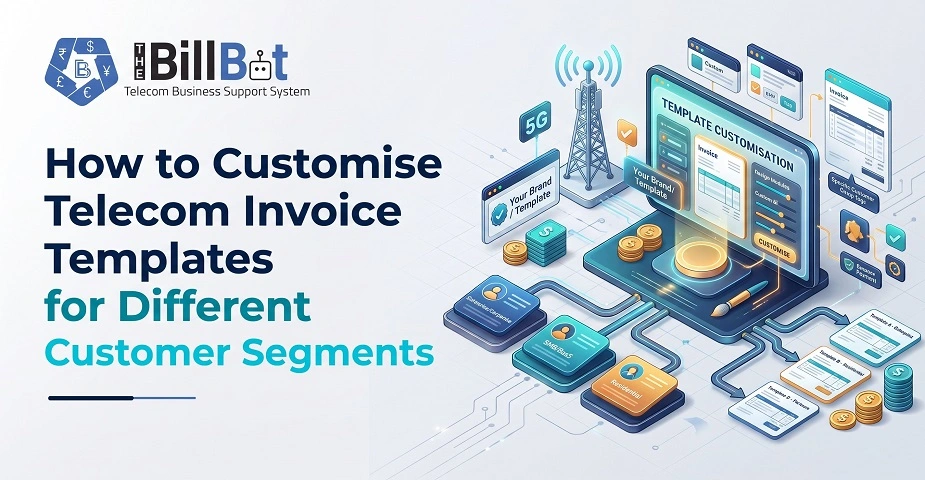
Table of Contents
- What Are Telecom Invoice Templates?
- Why Telecom Businesses Need Custom Invoice Templates
- 1. Improve Invoice Clarity
- 2. Support Different Billing Requirements
- 3. Maintain a Professional Brand Image
- 4. Reduce Billing Queries
- 5. Improve Customer Experience
- Understanding Different Customer Segments in Telecom Billing
- 1. Residential and Individual Customers
- 2. Small and Medium-Sized Businesses
- 3. Enterprise Customers
- 4. Wholesale and Reseller Customers
- How to Customise Telecom Invoice Templates for Different Customer Segments
- 1. Identify Customer Billing Requirements
- 2. Create Segment-Based Invoice Layouts
- 3. Customise Invoice Information Fields
- 4. Organise Charges According to Customer Needs
- 5. Personalise Branding and Invoice Design
- 6. Support Different Billing Cycles and Payment Terms
- 7. Include Relevant Usage Information
- 8. Automate Template Selection
- 9. Review and Test Every Template
- Key Features of Effective Custom Telecom Invoice Templates
- Flexible Invoice Layouts
- Accurate Billing Information
- Clear Service Descriptions
- Consistent Invoice Numbering
- Professional PDF Formatting
- Automated Invoice Generation
- Common Mistakes to Avoid When Customising Telecom Invoices
- Adding Too Much Information
- Using Too Many Different Templates
- Inconsistent Formatting
- Ignoring Customer Feedback
- Relying on Manual Invoice Customisation
- Benefits of Telecom Invoice Customisation for Business Growth
- How Telecom Billing Software Supports Invoice Customisation
- Conclusion
- Frequently Asked Questions (FAQ)
- 1. What are Telecom Invoice Templates?
- 2. Why should telecom businesses customise invoice templates?
- 3. Can telecom providers create different invoice templates for different customers?
- 4. What information should a telecom invoice include?
- 5. How do custom invoice templates improve customer experience?
- 6. Can telecom billing software automate invoice customisation?
- 7. What is the difference between standard and customised telecom invoices?
- 8. How often should telecom invoice templates be reviewed?
Author : Bhargav
Published : 25 Nov 2026
Related Articles
Explore more insights
24 Nov 2026 / Bhargav
How to Validate Customer and Subscription Data After Billing Migration
23 Nov 2026 / Bhargav
How to Manage Different Billing Dates Across Telecom Customer Accounts
21 Nov 2026 / Bhargav