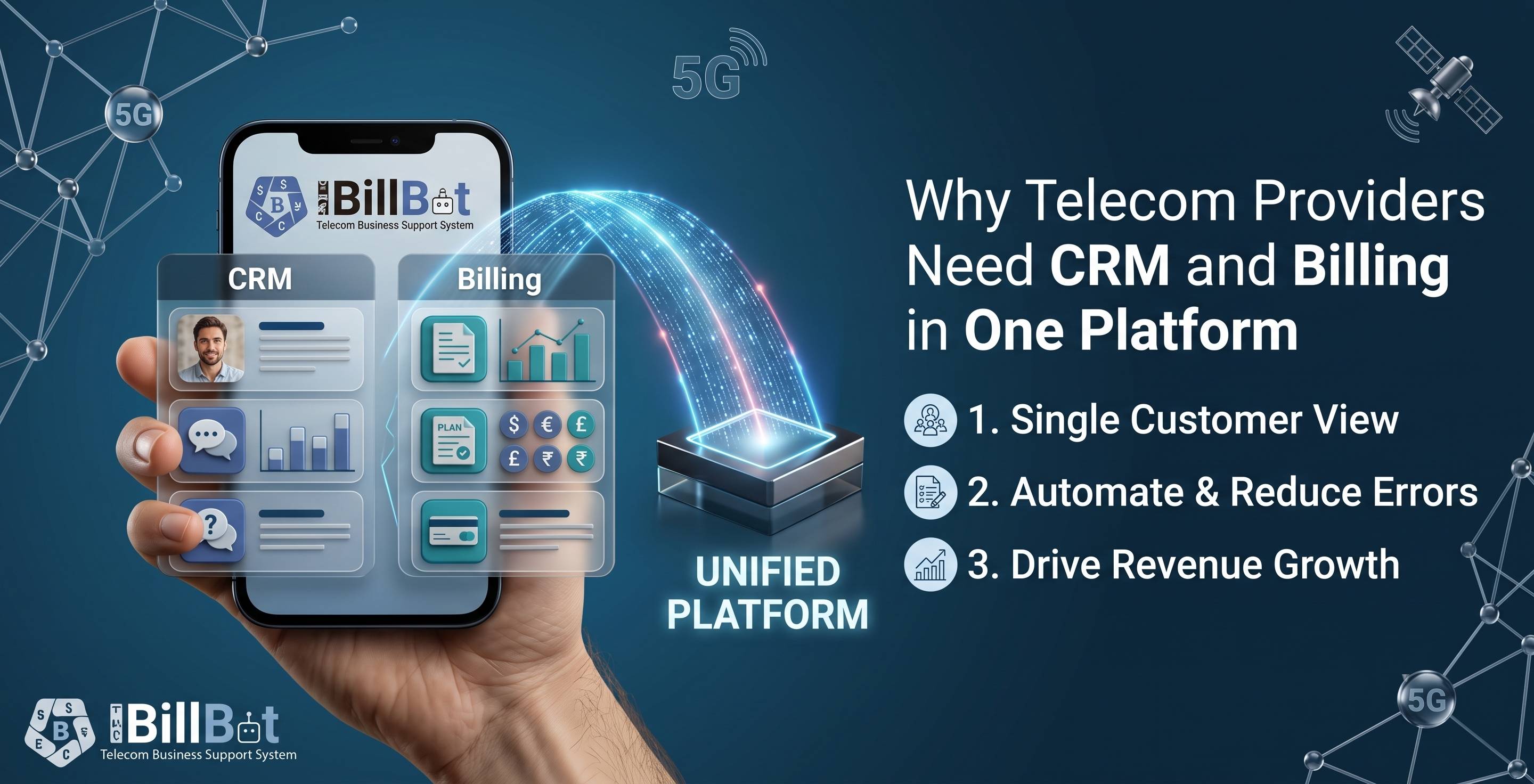
Telecom providers manage a complex combination of customers, services, usage data, invoices, payments, support requests, and business operations every day. As the number of customers and services grows, managing these activities through separate systems can create unnecessary complexity.
This is where CRM and Billing in one platform can make a significant difference.
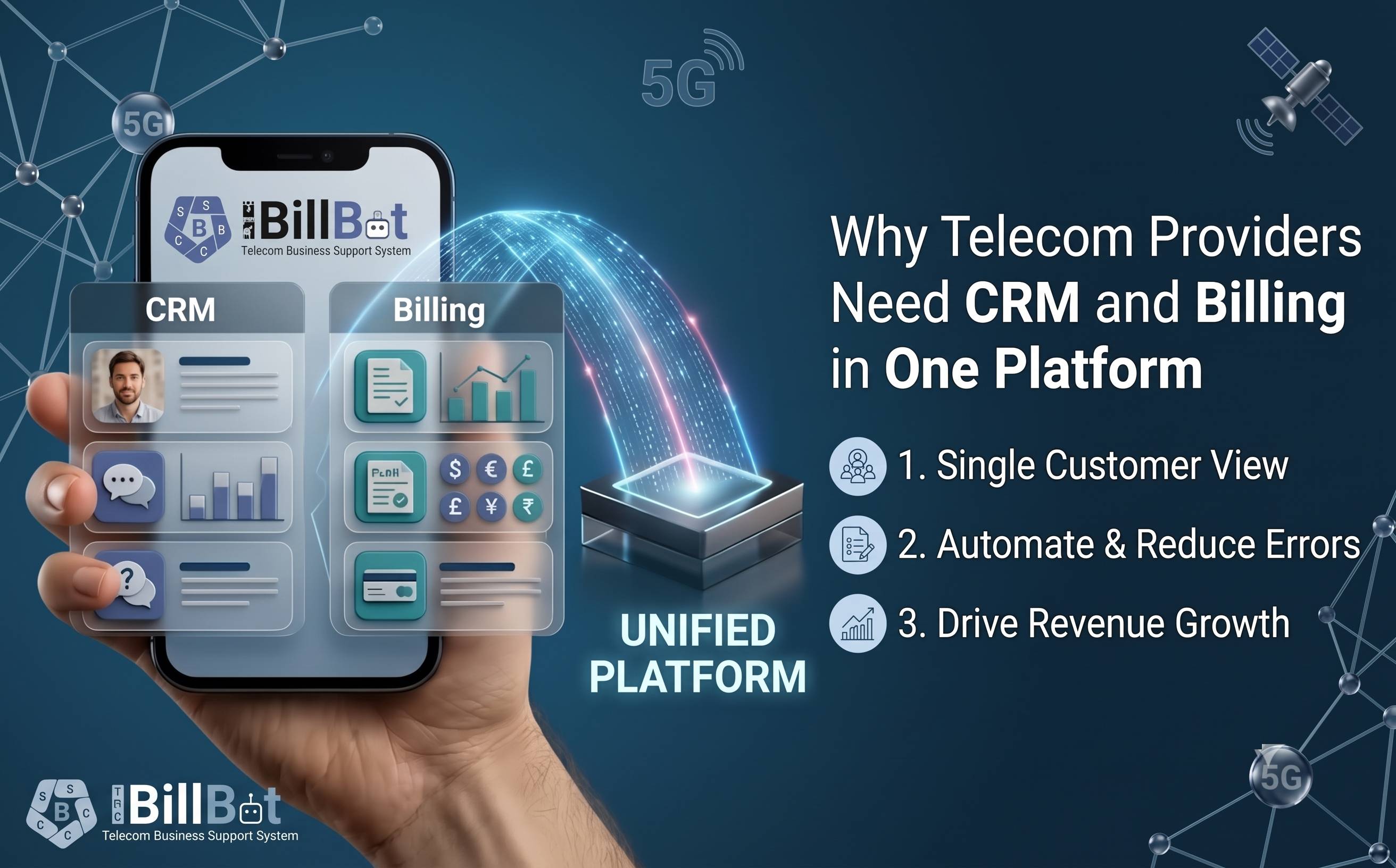
Instead of using one system for customer relationship management and another for billing, telecom businesses can bring both functions together through a unified CRM and Billing Platform. This approach helps teams access customer and billing information from one place, reduce manual work, improve operational visibility, and deliver a smoother customer experience.
For IT service providers, managed service providers, VoIP providers, and other telecom businesses, combining customer management and billing can create a more connected and efficient workflow.
What Is CRM and Billing?
CRM stands for Customer Relationship Management. A CRM system helps businesses manage customer information, leads, accounts, communication, sales activities, and customer relationships.
Billing software, on the other hand, focuses on invoicing, payments, usage-based charges, billing cycles, payment reminders, and financial records.
When these two functions operate separately, teams may need to move information between multiple platforms. This can result in duplicate data entry, delays, inconsistent information, and increased administrative work.
CRM and Billing brings these processes together.
A unified system can connect customer information with services, usage, invoices, payments, and account activity. This creates a single source of information that different teams can use throughout the customer lifecycle.
Why Telecom Providers Need CRM and Billing in One Platform
1. Centralise Customer and Billing Information
Telecom providers handle a large amount of customer data. This can include contact details, services, plans, account information, usage records, invoices, payment history, and communication records.
When this information is stored across different systems, employees may need to switch between applications to understand a customer's complete account.
With Telecom CRM and Billing, customer and billing information can be connected within one platform.
For example, a team member could view a customer's account and access relevant services, billing details, invoices, payment status, and account history without searching through multiple systems.
This centralised approach can make everyday customer management more organised.
2. Reduce Manual Data Entry
Manual data entry is one of the common challenges faced by growing telecom businesses.
When CRM and billing systems operate independently, information may need to be entered or transferred several times. A new customer created in the CRM may also need to be manually added to the billing system.
This creates additional work and increases the possibility of data-entry mistakes.
A CRM and Billing Platform can connect these processes. Customer information captured through the CRM can flow into relevant billing workflows, reducing repetitive administrative tasks.
Automation can help teams spend less time moving information between systems and more time focusing on customers and business operations.
3. Improve the Customer Onboarding Process
Customer onboarding involves several important steps, from capturing a lead to creating an account and activating services.
For telecom providers, the process may also involve contracts, service configuration, account setup, pricing, and billing information.
With integrated CRM and Billing Software, businesses can create a more connected onboarding process.
For example:
Capture a new lead in the CRM
Convert the lead into a customer
Create the customer account
Add required services
Configure billing information
Generate invoices according to the billing cycle
Send relevant customer communications
Connecting these activities can reduce delays and create a smoother transition from prospect to paying customer.
4. Make Billing More Accurate
Accurate billing is essential for telecom providers.
Billing can involve recurring charges, usage-based pricing, service plans, additional features, discounts, taxes, and other charges. Managing these calculations manually or across disconnected systems can become difficult as the business grows.
Telecom Billing Software can automate many billing activities and connect them with customer and service information.
When billing data is connected with CRM information, teams can have better visibility into which services a customer uses and how those services relate to billing.
This can help reduce billing inconsistencies and make invoice management more structured.
5. Create a Better Customer Experience
Customers expect telecom providers to provide clear information about their services and bills.
When customer service and billing teams use separate systems, resolving customer questions may require additional time.
For example, a customer may ask about an invoice, service plan, payment, or usage charge. The support representative may need to check several systems before providing an answer.
With integrated CRM for Telecom Providers, relevant customer and billing information can be available from one connected environment.
This can help customer-facing teams respond more efficiently and provide customers with clearer information.
6. Improve Payment Management
Getting invoices sent is only one part of the billing process. Telecom providers also need to monitor payments, identify outstanding balances, and follow up on overdue invoices.
A unified CRM and Billing solution can connect customer accounts with invoices and payment information.
Businesses can use automated workflows for activities such as:
Invoice generation
Invoice delivery
Payment tracking
Payment reminders
Outstanding balance monitoring
Customer payment history
Automation can reduce the amount of manual follow-up required by finance and operations teams.
7. Give Teams Better Business Visibility
Data becomes more useful when it is connected.
A standalone CRM may provide information about leads and customers, while a separate billing system may provide information about invoices and payments. Looking at these datasets independently can make it harder to understand the complete customer lifecycle.
A unified CRM and Billing Platform can connect customer, service, and financial information.
This can help businesses analyse areas such as:
Customer growth
Revenue trends
Outstanding payments
Service usage
Customer accounts
Billing activity
Sales pipeline
Customer lifecycle
Having connected information can support better operational planning and reporting.
Why CRM and Billing Software Is Important for Growing Telecom Businesses
As telecom businesses grow, their operational requirements also become more complicated.
A small provider may initially manage customers and billing using spreadsheets or multiple basic applications. However, as customer numbers increase, manual processes can become harder to maintain.
More customers mean more accounts, more invoices, more payments, more service records, and more support interactions.
This is where Telecom CRM Software combined with billing capabilities can provide a scalable operational foundation.
Instead of adding separate tools for every new requirement, businesses can use an integrated platform to manage connected processes.
CRM for Telecom Providers: Connecting Sales and Operations
CRM is not only about storing customer contact information.
For telecom providers, a CRM can support the complete customer journey, starting from lead generation and continuing through conversion, onboarding, service management, and ongoing customer relationships.
When CRM is connected with billing, sales and operations can work with more consistent customer information.
For example, once a prospect becomes a customer, relevant information can move into the account and billing workflow. This reduces the gap between sales activities and operational processes.
The result is a more connected customer lifecycle.
Telecom CRM and Billing for ITSPs and MSPs
IT service providers and managed service providers often manage multiple services for their customers.
These services may include connectivity, hosted services, VoIP, communication solutions, managed IT services, or other recurring services.
Managing customers and billing independently can become challenging when different services have different pricing structures and billing requirements.
Telecom CRM and Billing can help these businesses connect customer management with service and billing operations.
A unified platform can make it easier to manage customer accounts, service information, recurring charges, invoices, payments, and customer communications from a connected environment.
How an Integrated CRM and Billing Workflow Can Work
A typical workflow can look like this:
Step 1: Capture the Lead
A potential customer enters the sales pipeline through a website, referral, campaign, or sales activity.
Step 2: Manage the Customer Relationship
The CRM stores customer information and helps the sales team manage communication and opportunities.
Step 3: Convert the Lead
Once the prospect becomes a customer, the account can be created within the system.
Step 4: Add Services
The customer's selected telecom or IT services can be added to the account.
Step 5: Configure Billing
Pricing, billing cycles, usage rules, and other billing requirements can be configured.
Step 6: Generate Invoices
The billing system generates invoices based on configured services, plans, and usage.
Step 7: Manage Payments
Payments can be tracked while automated reminders can help follow up on outstanding balances.
This connected workflow reduces the need to manually transfer information between separate platforms.
Key Benefits of a CRM and Billing Platform
Choosing an integrated platform can provide several operational benefits for telecom businesses.
Centralised Data
Customer, service, and billing information can be managed from one connected system.
Greater Automation
Routine processes such as account creation, invoice generation, reminders, and reporting can be automated.
Reduced Administrative Work
Teams can spend less time entering the same information across multiple systems.
Improved Billing Visibility
Businesses can monitor invoices, payments, and customer billing activity more efficiently.
Better Customer Service
Customer-facing teams can access relevant account information more quickly.
Scalable Operations
An integrated system can provide a foundation for managing growing customer and service volumes.
What to Look for in CRM and Billing Software
Before selecting CRM and Billing Software, telecom providers should consider the functionality required by their business.
Important capabilities may include:
Customer and account management
Lead and opportunity management
Service management
Automated billing
Usage-based billing
Invoice generation
Payment tracking
Payment reminders
Reporting and analytics
Workflow automation
Integrations
Customisation options
Secure access and data management
The right platform should support current business requirements while also providing room for future growth.
The Future of Telecom Operations Is Connected
Telecom businesses increasingly need connected systems that can manage more than one part of the customer lifecycle.
Using separate tools for CRM, billing, payments, reporting, and service management can create operational gaps. A unified CRM and Billing solution can help close these gaps by connecting customer information with business and financial processes.
For telecom providers, ITSPs, MSPs, and other service-based businesses, this approach can simplify workflows, improve visibility, reduce repetitive work, and support a more consistent customer experience.
Rather than treating CRM and billing as two separate functions, businesses can manage them as connected parts of the same operational process.
Conclusion
CRM and Billing in one platform can provide telecom providers with a more connected way to manage customers, services, invoices, payments, and daily operations.
From customer onboarding and account management to automated billing and payment tracking, an integrated CRM and Billing Platform can reduce disconnected workflows and help teams work with centralised information.
As telecom businesses continue to grow, having connected systems can become increasingly important. By combining Telecom CRM Software with Telecom Billing Software, providers can create a streamlined operational environment designed to support efficiency, visibility, and long-term business growth.
Frequently Asked Questions
1. What is CRM and Billing?
CRM and Billing combines customer relationship management and billing functionality within one platform. It allows businesses to manage customer information, services, invoices, payments, and related workflows in a connected environment.
2. Why do telecom providers need CRM and Billing?
Telecom providers manage large amounts of customer, service, usage, and billing information. Combining CRM and billing can reduce manual data entry, connect customer information with invoices, and simplify operational workflows.
3. What is Telecom CRM and Billing?
Telecom CRM and Billing is an integrated approach that combines customer relationship management with telecom billing processes. It can help providers manage customers, services, invoices, payments, and account information from one platform.
4. What is CRM and Billing Software?
CRM and Billing Software combines CRM capabilities with billing functionality. Depending on the platform, it may support customer management, sales, invoicing, payments, usage billing, reminders, reporting, and automation.
5. How does CRM help telecom providers?
CRM for Telecom Providers can help manage leads, customer accounts, communications, services, sales activities, and customer relationships. When connected with billing, it can also provide greater visibility into customer financial activity.
6. Can CRM and Billing automate invoices?
Yes. Depending on the software, a CRM and Billing Platform can automate invoice creation based on configured services, billing cycles, usage, and pricing rules.
7. Can CRM and Billing help ITSPs and MSPs?
Yes. ITSPs and MSPs can use integrated CRM and billing capabilities to manage customers, services, recurring charges, invoices, payments, and customer communication within a connected workflow.
8. What should telecom providers consider when choosing CRM and Billing Software?
Providers should consider customer management, billing automation, usage-based billing, invoicing, payment management, reporting, integrations, customisation, security, and scalability when evaluating CRM and Billing Software.