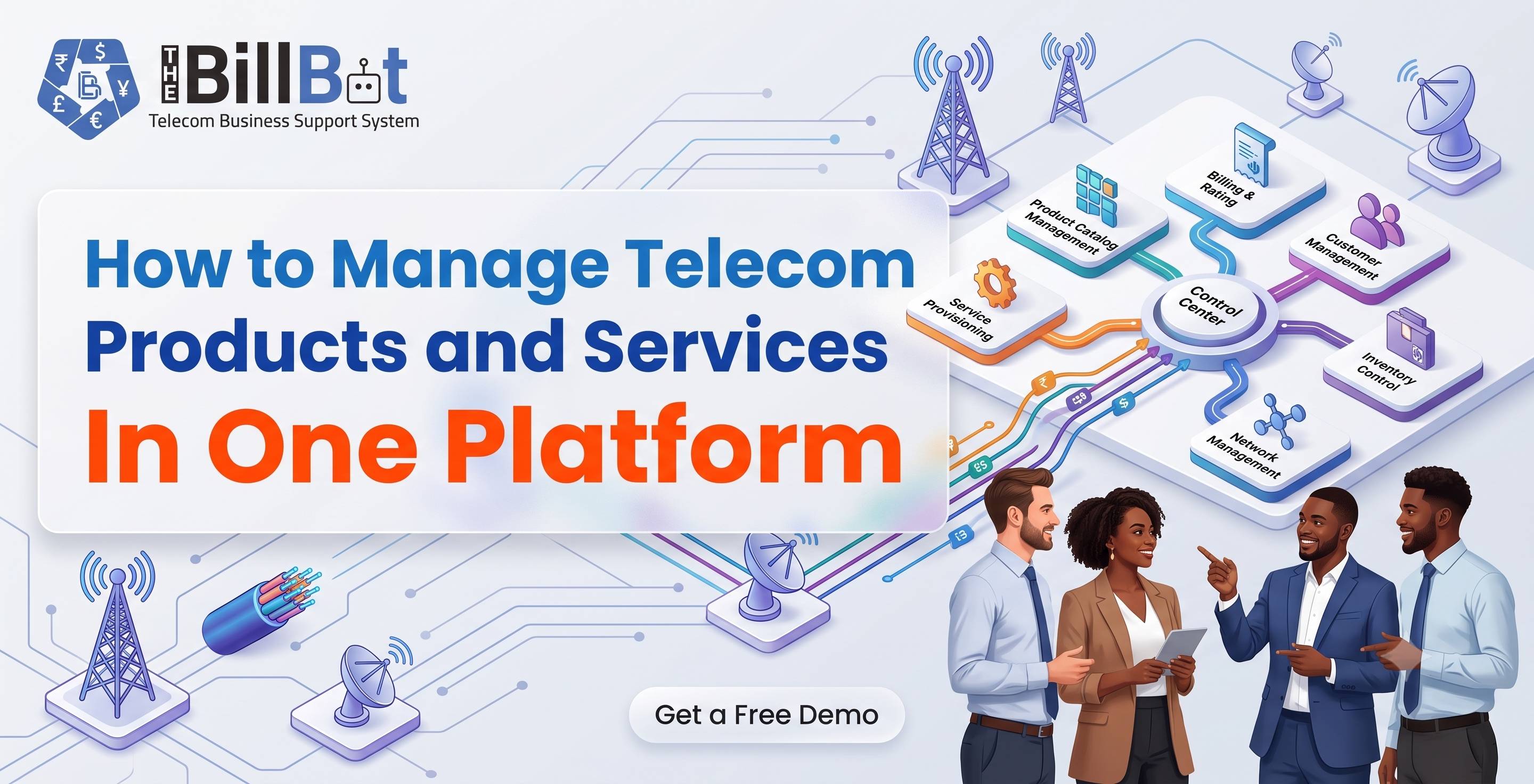
Managing multiple telecom offerings can quickly become complicated. Telecom providers often handle different products, service plans, pricing models, subscriptions, usage charges, customer accounts, invoices, and payment processes at the same time. When these activities are managed through separate systems, teams may spend more time moving data between tools than focusing on customers and business growth.
A centralized approach can make this process much easier.
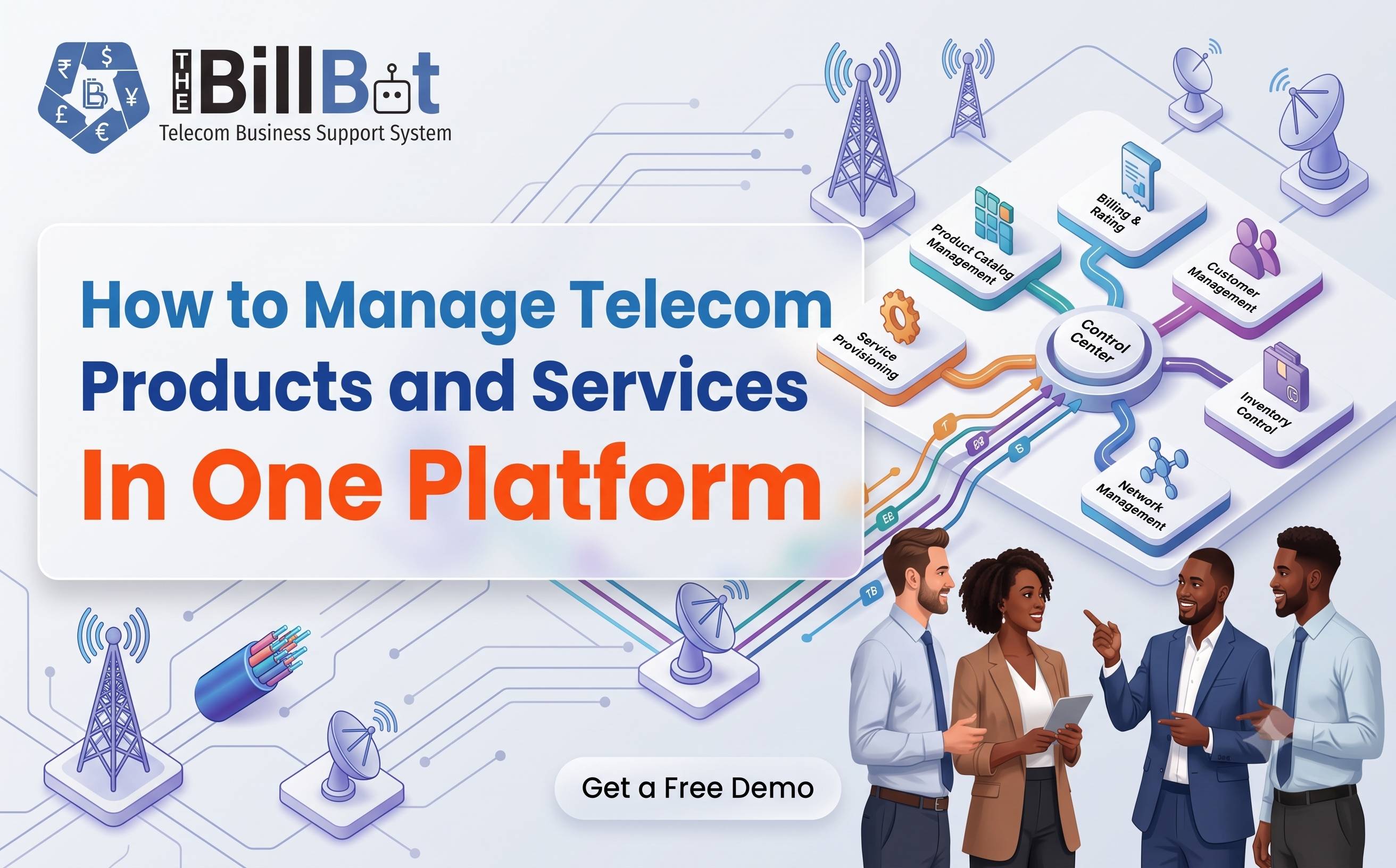
By managing Telecom Products and Services through one connected platform, providers can organize their product catalog, configure pricing, manage subscriptions, automate billing, monitor customer activity, and maintain better control over their operations.
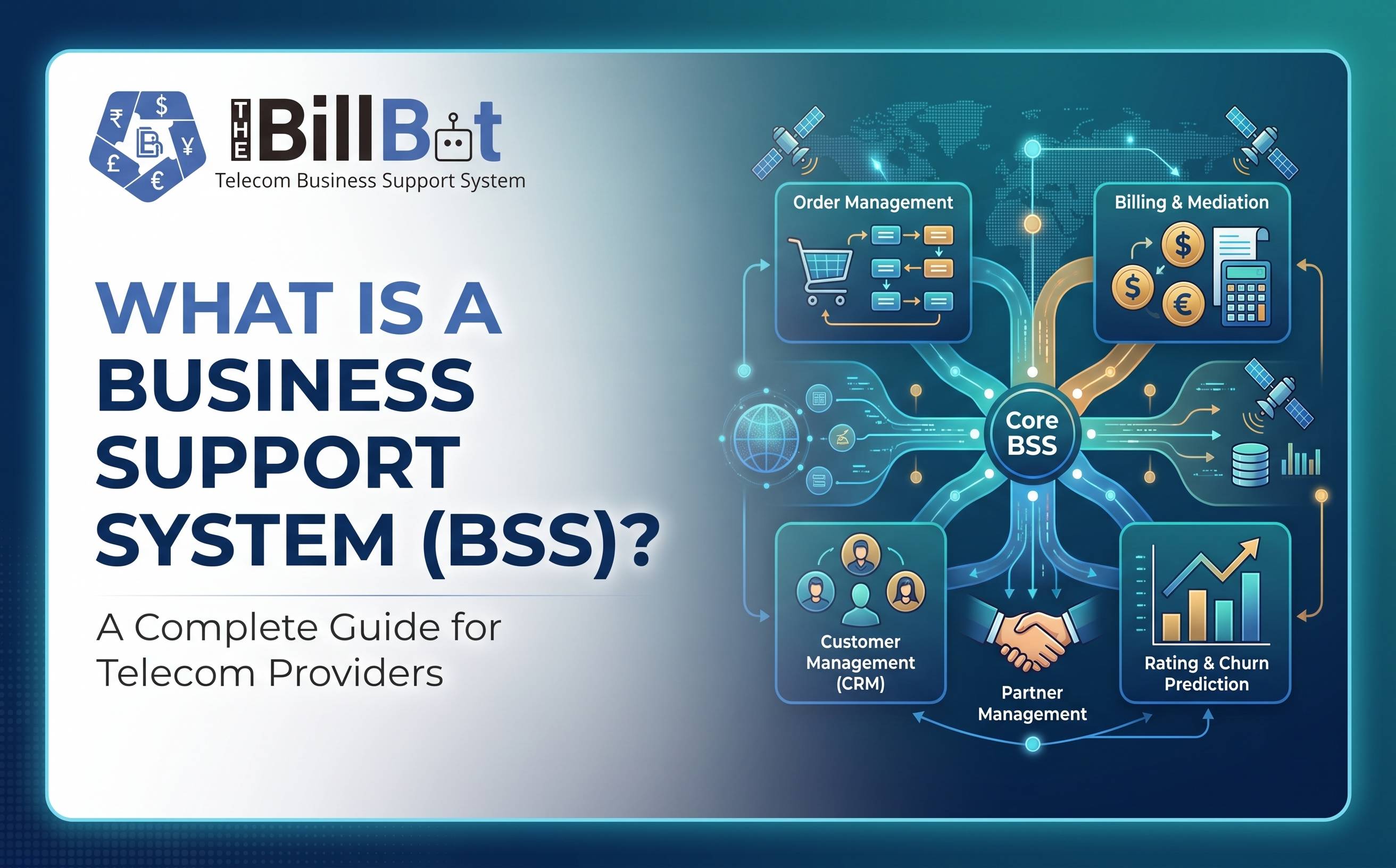
Modern telecom business support platforms increasingly bring product management, CRM, billing, and service operations together. Industry platforms commonly combine capabilities such as product management, charging, billing, service orchestration, and customer management within connected systems.
What Are Telecom Products and Services?
Telecom Products and Services include the connectivity, communication, and digital solutions that telecom providers offer to their customers.
Depending on the type of provider, these may include:
Broadband and internet plans
VoIP and voice services
DID numbers
Business phone systems
Mobile and wireless plans
Calling packages
Extensions and user accounts
Data services
Managed IT and communication services
Add-on packages
Usage-based services
Recurring subscription plans
Each product can have its own pricing, billing cycle, usage rules, contract terms, discounts, and customer eligibility.
For example, a telecom provider may offer a broadband package with a monthly subscription, a VoIP package based on users, and a calling plan that includes a specific number of minutes. Managing these offerings manually can become difficult as the number of products and customers increases.
This is where structured Telecom Product Management becomes important.
Why Managing Telecom Products and Services in One Platform Matters
Telecom businesses deal with multiple operational processes every day. Product configuration is connected to sales, customer onboarding, billing, payments, usage tracking, and reporting.
When these processes are spread across disconnected applications, teams may face duplicated data, manual updates, inconsistent pricing, and limited visibility.
A centralized Telecom Management Platform can connect these processes and create a more consistent workflow.
For example:
Product → Customer → Subscription → Usage → Billing → Payment → Reporting
Instead of maintaining each stage separately, a connected platform can allow information to flow between them.
This approach is particularly useful for providers managing recurring subscriptions, usage-based charges, bundles, and multiple service categories. Modern telecom billing platforms increasingly support combinations of recurring and usage-based models alongside broader service operations.
1. Build a Centralized Telecom Product Catalog
The first step in effective Telecom Product and Service Management is creating a centralized product catalog.
Instead of keeping product information in spreadsheets or different applications, providers can maintain products in one location.
A product catalog can include:
Product name
Product category
Description
Pricing
Billing frequency
Setup fees
Usage charges
Discounts
Contract duration
Included minutes or data
Service availability
Product status
A centralized catalog makes it easier for sales and operations teams to work with the same product information.
When a product changes, the update can be reflected across the relevant workflows instead of requiring teams to manually update multiple systems.
2. Manage Different Telecom Services Efficiently
Telecom providers rarely sell only one type of service.
A single customer might purchase broadband, voice, DID numbers, extensions, and additional calling packages.
Managing these Telecom Services individually can create unnecessary complexity.
A unified system allows providers to organize different services according to categories and customer requirements.
For example:
Connectivity Services
Broadband
Fiber
Dedicated internet
Wireless connectivity
Voice Services
VoIP
DID numbers
Extensions
Calling plans
Business Services
Hosted communication
Managed services
Business phone packages
By organizing services clearly, providers can make product selection easier for sales teams and customers.
3. Simplify Pricing and Product Configuration
Pricing is one of the most important parts of Telecom Product Management.
Telecom providers may use:
Monthly recurring pricing
Annual pricing
Usage-based pricing
Per-user pricing
Per-number pricing
One-time setup charges
Promotional pricing
Discounts
Bundled pricing
Managing these models manually can lead to pricing inconsistencies and billing problems.
A centralized Telecom Product Management Software solution can help providers define pricing rules and associate them with specific products or services.
For example, a VoIP package could include 10 users and a fixed monthly fee, while additional users could be charged separately. A calling plan could include a number of minutes and apply additional usage charges after the included allowance is reached.
The objective is to make pricing rules clear, repeatable, and easier to manage.
4. Connect Products With Customer Accounts
Product management should not operate separately from customer management.
Once a customer selects a telecom product, that product should be associated with the customer's account.
A connected system can help teams see:
Customer details
Active services
Subscriptions
Product packages
Billing information
Usage
Payment status
Service history
This gives teams a more complete view of the customer.
For telecom providers, this can also make customer support more efficient because staff do not have to search through several systems to understand which services a customer is using.
5. Automate Telecom Billing
One of the biggest benefits of centralized product management is the connection between products and billing.
Telecom Billing Software can use product configurations, subscriptions, usage information, and pricing rules to support automated billing processes.
For example:
Customer subscribes → Product is activated → Usage is recorded → Charges are calculated → Invoice is generated → Payment is collected
This reduces the need for repetitive manual billing activities.
A centralized billing workflow can also help providers manage recurring invoices, usage-based charges, discounts, adjustments, and payment reminders more consistently.
Modern telecom billing platforms commonly focus on consolidating billing across multiple services and automating pricing, billing, and subscription processes.
6. Manage Bundled Products and Services
Customers increasingly expect providers to offer complete packages rather than individual services.
A provider might combine:
Broadband
VoIP
DID numbers
Calling minutes
Business extensions
Managed support
into a single package.
A centralized platform makes it easier to create and manage these bundles.
Instead of treating every service as an isolated product, providers can define relationships between products and packages.
This can make it easier to create new offers while maintaining control over pricing and billing.
7. Improve Service Activation and Provisioning
Managing the sale of a product is only one part of the customer lifecycle. The selected service must also be activated and delivered.
A connected Telecom Service Management workflow can help link customer orders with provisioning processes.
For example:
Order received → Customer verified → Service configured → Account activated → Billing started
Depending on the provider's infrastructure, integrations and APIs can connect the business platform with external systems responsible for provisioning and service delivery.
This reduces the need for teams to manually transfer information between systems.
Telecom platforms increasingly emphasize connected workflows between product catalogs, ordering, provisioning, subscriptions, and billing.
8. Track Product and Service Performance
Managing Telecom Products effectively also requires understanding how those products perform.
A centralized platform can help businesses monitor information such as:
Number of active subscriptions
New customers
Product adoption
Service usage
Revenue
Outstanding invoices
Customer upgrades
Cancellations
Product performance
These insights can help management understand which services customers are purchasing and how different products are performing.
Instead of relying on disconnected spreadsheets, teams can use centralized information for reporting and operational planning.
9. Make Product Changes Easier
Telecom providers need to update their offerings as customer requirements and business strategies change.
A provider may want to:
Introduce a new plan
Change pricing
Add a new calling package
Modify included usage
Create a new bundle
Launch a promotional offer
Retire an existing product
With disconnected systems, each change can require multiple manual updates.
A centralized Telecom Management Platform can provide a structured location for managing these changes.
This can help reduce inconsistencies between sales information, customer subscriptions, and billing rules.
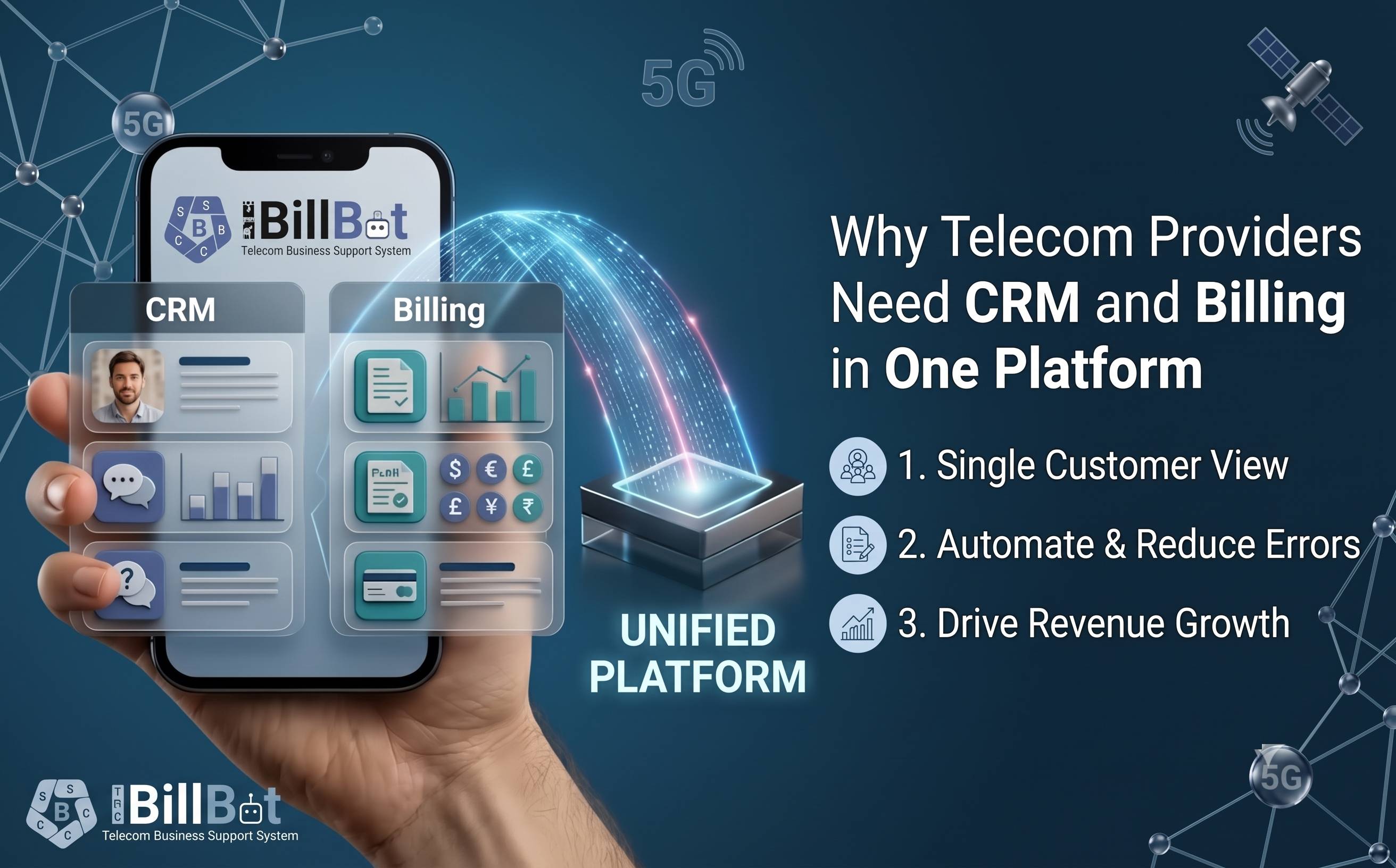
10. Connect CRM, Product Management and Billing
The real value of centralized Telecom Products and Services management comes from connecting different business functions.
A modern Telecom Business Management Software solution can bring together areas such as:
CRM + Product Management + Service Management + Billing + Payments + Reporting
This creates a connected customer lifecycle.
For example:
Lead
A potential customer enters the CRM.
Opportunity
The sales team identifies the customer's requirements.
Product Selection
The customer selects a telecom product or service.
Order
The selected product is added to the customer account.
Activation
The service is configured and activated.
Billing
The appropriate billing rules are applied.
Payment
The customer receives an invoice and completes payment.
Reporting
The business tracks revenue, usage, subscriptions, and customer activity.
This connected approach reduces unnecessary handoffs between departments and creates better visibility across the business.
Key Benefits of Managing Telecom Products and Services in One Platform
A centralized approach can provide several operational benefits.
Better Data Consistency
Product, customer, subscription, and billing information can be maintained in a connected environment.
Reduced Manual Work
Automated workflows can reduce repetitive data entry and administrative tasks.
Faster Product Launches
New products, packages, and pricing models can be configured more efficiently.
Improved Billing Accuracy
Connecting product rules with billing processes can reduce manual pricing and invoice-related errors.
Better Customer Visibility
Teams can see customer services, subscriptions, usage, and billing information in one place.
Easier Reporting
Centralized data makes it easier to monitor product performance, revenue, and customer activity.
Scalable Operations
As the number of products and customers grows, structured automation can help providers manage increasing operational complexity.
What to Look for in Telecom Service Provider Software
When selecting Telecom Service Provider Software, providers should consider the capabilities that match their operational requirements.
Important features may include:
Product catalog management
Flexible pricing configuration
Subscription management
Customer management
Telecom billing
Usage tracking
Invoice automation
Payment management
Service activation
API integrations
Reporting and analytics
Workflow automation
Role-based access
Customization options
The right platform should not simply provide a long list of features. It should connect the processes that your business actually uses.
How The Bill Bot Can Support Telecom Product and Service Management
For telecom providers, ITSPs, VoIP businesses, and MSPs, managing products is closely connected to customer management, billing, invoicing, payments, and reporting.
The Bill Bot is designed around this type of connected business workflow, helping businesses bring important operational activities into a centralized environment.
By connecting product and service management with billing and customer processes, businesses can create a smoother journey from customer acquisition to service delivery and revenue collection.
For providers managing multiple telecom offerings, the goal is simple: reduce unnecessary manual work, maintain better control over products and services, and create a more connected operational workflow.
Conclusion
Managing Telecom Products and Services through separate systems can create unnecessary complexity as a telecom business grows. Product information, pricing, customer accounts, service activation, usage, billing, and payments are closely connected, so managing them independently can make operations harder to control.
A centralized Telecom Product and Service Management approach brings these processes together.
From creating a product catalog and configuring pricing to managing subscriptions, activating services, automating billing, and analyzing performance, one connected platform can give telecom providers greater visibility and operational consistency.
For growing telecom businesses, the focus should be on creating a connected workflow where products, customers, services, and billing work together rather than operating as separate processes.
The result is a more organized foundation for managing today's telecom services while creating room for future products, packages, and business growth.