
VoIP providers handle thousands of calls, different pricing plans, and customers with varying communication needs. Some customers make occasional calls, while others depend on voice services throughout the working day. Charging every customer a fixed amount regardless of their usage may not always be practical. This is where Usage-Based Billing for VoIP Providers becomes particularly valuable. Usage-based billing allows service providers to charge customers according to the services they actually consume. Depending on the pricing model, charges may be calculated using call duration, destination, service type, usage volume, or other agreed billing parameters. This approach gives providers greater flexibility while helping customers understand what they are paying for. However, calculating usage accurately requires more than simply recording calls and applying rates. Providers must collect Call Detail Records (CDRs), process usage data, apply the correct pricing rules, calculate charges, and generate invoices. When these activities rely on spreadsheets and manual processes, billing errors and delays can become difficult to avoid. With the right VoIP Billing Software and automated workflows, providers can simplify this entire process. From collecting call records to generating customer invoices, a well-organised billing system can improve accuracy, reduce administrative work, and support business growth. In this guide, we explore how usage-based billing works, how CDRs become invoices, and what VoIP providers should consider when improving their billing operations. Usage-based billing is a pricing approach in which customers are charged according to their actual consumption of a service rather than paying only a fixed recurring fee. For VoIP providers, this commonly means calculating charges based on call duration, destination-specific rates, billable call units, or other measurable usage. For example, a business customer might make calls to several destinations throughout the month. Each destination may have a different rate, and the final bill depends on the number of billable calls and their corresponding charges. A usage-based billing model helps providers align charges with the services delivered. A typical process involves the following steps: Collect usage data: Retrieve call records from the relevant PBX, softswitch, or telecommunications platform. Process CDRs: Validate records and identify incomplete, duplicate, or invalid data. Apply pricing rules: Match each billable call with the appropriate customer rates and charging conditions. Calculate charges: Determine the cost of each call using the applicable billing rules. Generate invoices: Consolidate billable usage into customer invoices. Share billing information: Deliver invoices and usage summaries through the configured billing workflow. Automating these stages makes it easier to handle large volumes of call records without calculating every charge manually. Call Detail Records are the foundation of many usage-based VoIP billing systems. They contain information about individual calls and provide the data needed to determine which services were used and how much customers should be charged. Depending on the source system, a CDR may include: Call start and end timestamps Calling and called numbers Call duration Call status Destination information Trunk or route details Customer or account identifiers Associated cost or rate information, where available The precise fields depend on the telephony platform and how it generates call records. Without reliable call records, providers may struggle to calculate usage accurately. Missing records can lead to underbilling, while duplicated records may cause customers to be charged incorrectly. CDRs also help providers investigate billing queries. If a customer questions an invoice, the provider can review the relevant call records and explain how the charges were calculated. For businesses managing multiple customers, destinations, and pricing plans, an effective CDR Billing Software solution can make these records easier to process and reconcile. The objective is not simply to collect call data. It is to turn that data into accurate, traceable, and billable usage information. The journey from a completed call to a customer invoice involves several connected stages. Understanding these stages helps providers identify where automation can improve their operations. The first stage is collecting call records from the systems that handle customer communications. These may include PBX platforms, softswitches, gateways, or other supported telephony systems. Depending on the integration, records may be transferred through files, APIs, or other data exchange methods. Providers need a consistent collection process to ensure that relevant usage data reaches the billing system. If records are collected manually, employees may need to download files, check timestamps, organise data, and import records individually. This becomes increasingly difficult as call volumes grow. Automated collection can reduce repetitive work and establish a more consistent billing workflow. Once records enter the billing system, they must be checked before charges are calculated. Automated CDR Processing can help providers identify problems such as: Duplicate call records Missing customer identifiers Invalid or incomplete fields Unrecognised destinations Incorrect duration values Records that require further investigation Not every unusual record is necessarily invalid. For example, a zero-duration record may represent a failed call or a specific event recorded by the telephony platform. Billing rules should determine how such records are handled. A reliable validation process helps separate billable usage from records that need review. This stage is particularly important for providers managing high call volumes, where manually checking every record would consume considerable time. After validation, the billing system must determine how each call should be charged. Different customers may have different pricing arrangements. One customer might receive standard destination-based rates, while another may have negotiated rates or a customised price plan. Pricing rules may consider: Destination or country Call duration Billing increments Minimum chargeable duration Customer-specific rates Service or product type Applicable discounts Agreed allowances or bundles For example, suppose a provider charges £0.02 per billable minute for a particular destination. A customer makes a call lasting 10 minutes and 30 seconds. If the contract specifies per-second billing, the charge would be calculated using the actual billable duration. If the contract specifies rounding up to the next full minute, the charge would be calculated using 11 minutes instead. The difference illustrates why providers must apply the correct contractual rules rather than using a single calculation for every customer. Flexible pricing configuration is an important feature of effective VoIP Billing Solutions because it allows providers to manage different commercial arrangements consistently. Once the applicable rates and billing rules are identified, the system calculates the charges associated with each billable record. Depending on the service and agreement, the calculation may include duration-based charges, fixed connection fees, minimum charges, discounts, or other applicable adjustments. The system then aggregates the calculated charges for each customer and billing period. For instance, a business customer might have made calls to domestic and international destinations throughout the month. Each call is rated according to the applicable pricing rules, and the resulting charges are combined into a usage summary. A well-structured process makes it easier to trace the final amount back to the underlying records. This is one of the key benefits of CDR to Invoice Automation: providers can reduce manual calculations while maintaining a clearer relationship between call activity and customer charges. Once billable usage has been calculated, the billing system can prepare invoices. Depending on the provider's billing configuration, an invoice may include: Customer account information Billing period Summary of usage charges Call or destination breakdowns Recurring service charges, where applicable Discounts and adjustments Taxes, where applicable Total amount payable Payment terms and due date A clear invoice helps customers understand the services they have consumed and the charges they need to pay. Providers should also ensure that invoice totals are consistent with the underlying usage calculations and that adjustments are recorded appropriately. When supported by the billing platform, automated invoice generation can reduce administrative effort and help providers maintain a more predictable billing schedule. The billing process does not end when an invoice is created. Providers must also deliver invoices to customers, track outstanding balances, and manage payment-related activities. Depending on the system, invoices may be sent electronically, while reminders can be scheduled according to payment terms. Payment tracking and reconciliation help providers identify which invoices have been paid, which remain outstanding, and which require follow-up. Connecting usage-based billing with payment workflows can reduce the need to move between separate tools and manually update customer accounts. Together, these stages create a more connected billing process, from the initial call record to the final payment. Implementing Usage-Based Billing for VoIP Providers can improve several areas of business operations. Accurate billing depends on reliable usage records, correct pricing rules, and consistent calculations. Automated validation and rating can reduce errors associated with manually copying data or calculating charges in spreadsheets. Providers should still monitor exceptions and periodically review billing rules to ensure that invoices reflect customer agreements. Processing thousands of call records manually can place considerable pressure on billing teams. Telecom Billing Automation reduces repetitive work by streamlining data collection, usage validation, charge calculation, and invoice generation. This gives employees more time to investigate exceptions, support customers, and improve billing procedures. Customers are more likely to understand their invoices when charges can be connected to actual usage. Detailed usage summaries help explain how costs were calculated and make it easier to respond to billing questions. Transparent invoices can also strengthen trust between providers and their customers. Different customers have different communication requirements. Some prefer pay-as-you-go arrangements, while others benefit from bundled allowances, discounted rates, or a combination of recurring and usage-based charges. A configurable billing platform allows providers to support these arrangements without rebuilding their entire billing process for every customer. As a VoIP business expands, the number of customer accounts, call records, price plans, and invoices usually increases. A scalable billing workflow helps providers manage this growth without increasing manual administrative work at the same rate. The right software can also provide a clearer overview of usage patterns and billing activity. Although usage-based billing provides flexibility, managing it manually can create operational difficulties. Large numbers of calls generate substantial quantities of data. Collecting and processing these records manually can delay billing and increase the risk of errors. Different customers may have different destination rates, billing increments, discounts, and contractual conditions. Applying these rules consistently becomes challenging when calculations rely on spreadsheets. Duplicate CDRs can result in incorrect charges, while missing records may cause legitimate usage to be overlooked. Providers need suitable validation, reconciliation, and exception-handling procedures. When billing teams must wait for data collection, manual checks, and spreadsheet calculations, invoices may be generated later than expected. Delays can affect payment schedules and create additional administrative work. Without a clear link between usage records, pricing rules, and invoice totals, investigating customer queries can take longer than necessary. A centralised billing process makes it easier to review the information behind individual charges. Addressing these challenges requires reliable data, clear billing policies, and software that supports the provider's operational requirements. The right VoIP Billing Software brings essential billing activities together in a more organised workflow. Rather than relying on separate spreadsheets for CDR processing, price calculations, and invoices, providers can use an integrated system to manage these activities. Important capabilities to consider include: Automated CDR Processing: Helps collect, validate, and prepare call records for billing. Flexible Price Plan Management: Supports different customer rates, destinations, billing increments, and charging rules. Automated Charge Calculation: Applies configured pricing rules consistently to eligible usage records. Invoice Generation: Converts calculated charges into structured customer invoices. Usage Reporting: Helps providers review call volumes, usage trends, and billing activity. Customer Account Management: Connects usage and invoices to the appropriate customer accounts. Payment Tracking: Supports monitoring outstanding invoices and reviewing payment status. System Integrations: Connects billing workflows with supported telephony platforms and other business applications. Not every billing platform offers the same capabilities. Providers should confirm that the available features, integrations, and pricing configurations meet their specific requirements. For businesses looking to simplify these operations, The Bill Bot provides a platform focused on billing and business support for telecom and IT service providers. Explore the platform at The Bill Bot to learn more about its billing capabilities and available solutions. Moving towards automated billing requires more than selecting software. Providers should also establish reliable processes and review their existing pricing arrangements. Identify how call records are collected, where pricing rules are maintained, how invoices are generated, and which activities require manual intervention. This helps reveal the areas where automation can deliver the greatest benefit. Review the record formats and fields supplied by your telephony systems. Establish rules for identifying incomplete records, duplicates, and unsupported data. Consistent input data makes downstream billing calculations more reliable. Check that destination rates, billing increments, discounts, minimum charges, and other applicable conditions reflect customer agreements. Test representative call records before applying new rules to live billing operations. Compare processed records with the source data and investigate unexpected differences. Reconciliation helps identify missing records, duplicates, and rating issues before invoices reach customers. Use test cases covering short calls, long calls, different destinations, failed calls, discounts, and customer-specific rates. Testing helps confirm that the system behaves as expected under different conditions. Review metrics such as invoice accuracy, billing completion time, exception volumes, disputed invoices, and overdue payments. Regular monitoring helps providers identify opportunities to improve their billing operations. Telecommunications services continue to evolve, and customers increasingly expect pricing arrangements that reflect their specific needs. Usage-based models allow providers to charge for measurable consumption, while hybrid approaches combine usage charges with recurring subscriptions or bundled allowances. At the same time, providers need better visibility into usage, revenue, and billing performance. Modern billing platforms can help connect call records, pricing rules, customer accounts, invoices, and reporting in a more consistent workflow. As businesses expand their service portfolios, Usage-Based Billing for VoIP Providers will remain an important consideration for managing variable consumption and flexible pricing arrangements. The long-term objective is straightforward: make sure billable usage is recorded accurately, charges follow the agreed pricing rules, and customers receive clear invoices on time. Usage-based billing gives VoIP providers a practical way to charge customers according to their actual consumption. However, the accuracy of this model depends on how effectively providers manage the journey from call records to invoices. Collecting CDRs, validating usage, applying pricing rules, calculating charges, generating invoices, and tracking payments all play an important role in the process. When these activities rely heavily on manual work, billing teams may face unnecessary delays, errors, and administrative pressure. By adopting suitable VoIP Billing Software and introducing reliable automation, providers can streamline billing workflows, improve transparency, and manage increasing call volumes more efficiently. For providers planning to scale their operations, the key is to establish a billing process that is accurate, flexible, traceable, and aligned with customer agreements. Looking to simplify your telecom billing operations? Explore The Bill Bot and discover how an integrated billing platform can support more efficient business processes. Usage-based billing is a pricing model in which VoIP customers are charged according to their actual consumption. Charges may depend on call duration, destination, billable units, or other agreed pricing conditions. Call Detail Records are data records generated by telephony systems that describe individual calls. Depending on the platform, they can contain information such as call duration, timestamps, calling and called numbers, call status, and destination details. CDRs are collected from telephony systems, validated, matched with customer accounts, and processed using the applicable pricing rules. The resulting charges are aggregated for the billing period and used to generate customer invoices. Automated CDR Processing can validate incoming records, identify duplicates, flag incomplete data, and apply consistent processing rules. These controls reduce manual errors, although providers must still review exceptions and reconcile usage data. CDR Billing Software processes call records and uses configured billing rules to calculate charges. Depending on its capabilities, it can also support invoice generation, usage reporting, customer account management, and payment workflows. Yes. Suitable VoIP Billing Solutions can support customer-specific rates, destination-based pricing, billing increments, discounts, and other agreed charging conditions. The available options depend on the software and its configuration. CDR to Invoice Automation connects call record processing, charge calculation, and invoice generation in a streamlined workflow. It reduces the need for manual data transfers and calculations while helping providers maintain consistent billing procedures. Neither model is universally better. Usage-based billing can suit customers whose consumption varies, while fixed monthly billing may suit customers who prefer predictable costs. Some providers combine both approaches to meet different customer requirements. Providers should evaluate CDR processing, pricing flexibility, invoice generation, customer account management, reporting, payment tracking, integration support, security, and scalability. They should also confirm that the system supports their existing telephony platforms and billing agreements. Telecom Billing Automation can reduce repetitive administrative work, improve consistency, accelerate invoice preparation, and make billing information easier to review. These benefits can help providers manage increasing customer numbers and call volumes more efficiently.Introduction
What Is Usage-Based Billing for VoIP Providers?
How Does Usage-Based Billing Work?
Understanding Call Detail Records (CDRs) in VoIP Billing
Why Are CDRs Important?
From CDRs to Invoices: How the Billing Process Works
1. CDR Collection from Telephony Systems
2. Automated CDR Processing and Validation
3. Applying Customer-Specific Pricing Rules
4. Calculating Usage and Generating Charges
5. Generating Accurate Customer Invoices
6. Delivering Invoices and Managing Payments
Key Benefits of Usage-Based Telecom Billing
1. Greater Billing Accuracy
2. Improved Operational Efficiency
3. Better Billing Transparency
4. Flexible Pricing Models
5. Better Support for Business Growth
Common Challenges in Manual VoIP Billing
High Volumes of Call Records
Complex Pricing Structures
Duplicate or Missing Records
Delayed Invoice Generation
Difficulty Investigating Billing Disputes
How VoIP Billing Software Simplifies Usage-Based Billing
Best Practices for Implementing Automated VoIP Billing
Review Your Existing Billing Process
Standardise CDR Data
Verify Pricing Rules
Reconcile Usage Before Invoicing
Test Different Billing Scenarios
Monitor Billing Performance
The Future of Usage-Based Billing for VoIP Providers
Conclusion
Frequently Asked Questions (FAQs)
1. What is usage-based billing for VoIP providers?
2. What are Call Detail Records (CDRs) in VoIP billing?
3. How are CDRs converted into customer invoices?
4. How does automated CDR processing improve billing accuracy?
5. What is CDR Billing Software?
6. Can VoIP providers use different pricing plans for different customers?
7. What is CDR to Invoice Automation?
8. Is usage-based billing better than fixed monthly billing?
9. What should VoIP providers look for in billing software?
10. How can telecom billing automation help a growing VoIP business?
Usage-Based Billing for VoIP Providers: From CDRs to Invoices
Bhargav
Oct 30, 2026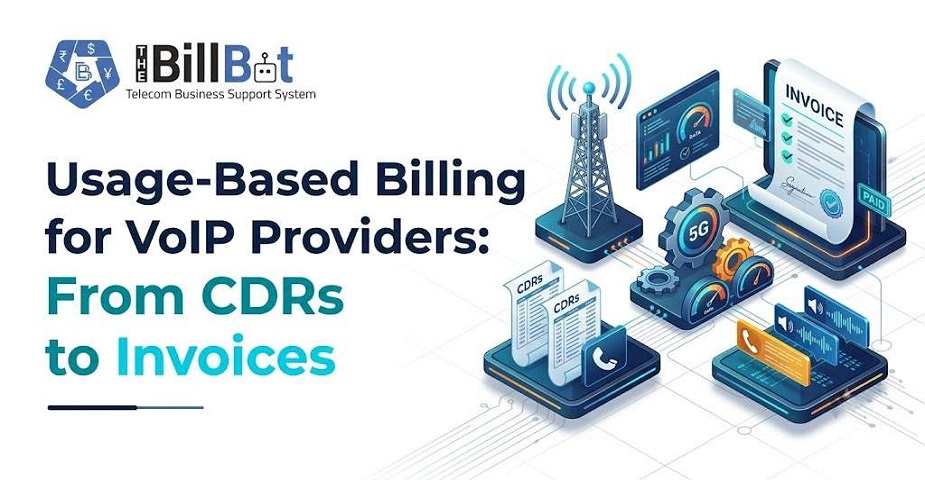
Table of Contents
- Introduction
- What Is Usage-Based Billing for VoIP Providers?
- How Does Usage-Based Billing Work?
- Understanding Call Detail Records (CDRs) in VoIP Billing
- Why Are CDRs Important?
- From CDRs to Invoices: How the Billing Process Works
- 1. CDR Collection from Telephony Systems
- 2. Automated CDR Processing and Validation
- 3. Applying Customer-Specific Pricing Rules
- 4. Calculating Usage and Generating Charges
- 5. Generating Accurate Customer Invoices
- 6. Delivering Invoices and Managing Payments
- Key Benefits of Usage-Based Telecom Billing
- 1. Greater Billing Accuracy
- 2. Improved Operational Efficiency
- 3. Better Billing Transparency
- 4. Flexible Pricing Models
- 5. Better Support for Business Growth
- Common Challenges in Manual VoIP Billing
- High Volumes of Call Records
- Complex Pricing Structures
- Duplicate or Missing Records
- Delayed Invoice Generation
- Difficulty Investigating Billing Disputes
- How VoIP Billing Software Simplifies Usage-Based Billing
- Best Practices for Implementing Automated VoIP Billing
- Review Your Existing Billing Process
- Standardise CDR Data
- Verify Pricing Rules
- Reconcile Usage Before Invoicing
- Test Different Billing Scenarios
- Monitor Billing Performance
- The Future of Usage-Based Billing for VoIP Providers
- Conclusion
- Frequently Asked Questions (FAQs)
- 1. What is usage-based billing for VoIP providers?
- 2. What are Call Detail Records (CDRs) in VoIP billing?
- 3. How are CDRs converted into customer invoices?
- 4. How does automated CDR processing improve billing accuracy?
- 5. What is CDR Billing Software?
- 6. Can VoIP providers use different pricing plans for different customers?
- 7. What is CDR to Invoice Automation?
- 8. Is usage-based billing better than fixed monthly billing?
- 9. What should VoIP providers look for in billing software?
- 10. How can telecom billing automation help a growing VoIP business?
Author : Bhargav
Published : 30 Oct 2026
Related Articles
Explore more insights
29 Oct 2026 / Bhargav
Recurring vs Usage-Based Billing: What Telecom Providers Need to Know
28 Oct 2026 / Bhargav
How to Automate Telecom Contract Renewals and Reduce Manual Work

27 Oct 2026 / Bhargav