Telecom providers manage a large number of customer contracts, service agreements, pricing plans, billing terms, renewal dates, and usage commitments. As the customer base grows, keeping track of all these details manually can become difficult. A missed renewal date, incorrect billing term, or outdated contract can create unnecessary administrative work and affect the customer experience. This is where Telecom Contract Management becomes valuable. A structured contract management approach gives telecom providers a central place to manage agreements throughout their lifecycle. From creating contracts and monitoring important dates to handling renewals and connecting contract information with billing processes, the right system can make day-to-day operations more organised and efficient. For providers offering VoIP, business communications, connectivity, managed services, or other telecom solutions, contract management can also help connect sales, operations, customer management, and billing teams around the same information. Telecom Contract Management is the process of creating, storing, monitoring, managing, and renewing contracts between telecom providers and their customers. A telecom contract can contain important information such as: Customer and account details Products and services Contract start and end dates Pricing and billing terms Discounts and promotional periods Minimum commitments Payment terms Service terms Renewal conditions Cancellation terms Usage or service obligations When this information is stored across spreadsheets, emails, documents, and different business systems, it can be difficult for teams to maintain accurate records. A centralised Telecom Contract Management System can bring these details together and provide teams with better visibility into active contracts, upcoming renewals, billing requirements, and customer agreements. Contract renewals may look simple, but managing them at scale can become complicated. A telecom provider may have hundreds or thousands of customers with different contract periods. Some agreements may renew annually, while others may have different renewal dates or specific notice periods. Without a structured process, teams may need to manually check spreadsheets or search through emails to identify contracts approaching expiration. This can lead to: Missed renewal opportunities Expired contracts Delayed customer communication Incorrect pricing Outdated service terms Manual administrative work Billing discrepancies Telecom Contract Management for Providers helps reduce these challenges by creating a more organised way to monitor and manage the contract lifecycle. One of the biggest benefits of contract management is improved visibility into upcoming renewals. Instead of relying entirely on manual calendars or spreadsheets, providers can maintain contract dates in a central system. A Telecom Contract Management Software solution can store customer agreements and related information in one location. Teams can quickly access details such as: Contract start date Expiration date Renewal date Pricing Services included Contract terms Customer information This makes it easier for sales, customer service, finance, and operations teams to work from consistent information. Renewal management becomes much easier when important dates are clearly visible. A Telecom Contract Renewal Management process can help teams identify contracts that are approaching expiration and plan customer communication in advance. Instead of discovering an expired contract after the fact, teams can work proactively and prepare renewal discussions earlier. Manual reminders can easily be forgotten, especially when teams manage a large customer base. Telecom Contract Automation can help automate notifications for important contract events. For example, a system can notify the relevant team when a contract is approaching its renewal period. This gives employees time to review the agreement, contact the customer, and prepare the next steps. Renewals are also an opportunity to strengthen customer relationships. When teams have accurate contract information available, they can communicate with customers more confidently. They can review existing services, pricing, and terms before discussing the next contract period. This creates a more structured renewal experience for both the provider and customer. Contract management and billing are closely connected. A contract may define the services a customer receives, the agreed pricing, billing frequency, discounts, payment terms, and other commercial conditions. If billing teams do not have access to accurate contract information, invoices may not always reflect the latest agreement. This is where Telecom Billing Management can benefit from better contract data. A central contract system can help teams verify agreed pricing and billing conditions before invoices are generated. This can reduce the risk of: Incorrect prices Expired discounts Incorrect billing periods Missing charges Incorrect service quantities Outdated contract terms When contract information is properly maintained, billing teams have a clearer reference point for customer invoicing. Telecom customers may have customised pricing based on services, usage, volume, contract duration, or negotiated discounts. Managing these details manually can become challenging. A Telecom Contract Management System can provide a structured record of the commercial terms associated with each customer agreement, helping teams manage billing requirements more consistently. Renewals can involve changes to pricing, products, service quantities, or discounts. For example, a customer may renew a contract with: A new monthly price Additional services Updated usage rates A different discount New payment terms Keeping these changes connected to the contract helps reduce confusion between the renewal process and billing operations. Automation is becoming increasingly important as telecom providers manage more customers and services. Telecom Contract Automation can reduce repetitive administrative tasks by helping teams manage common contract activities more efficiently. Automation can support areas such as: Contract expiry reminders Renewal notifications Contract status tracking Document management Approval workflows Customer notifications Contract updates Billing-related information The goal is not to remove human involvement from contract management. Instead, automation can handle repetitive processes so employees can spend more time on customer relationships, contract reviews, and business decisions. Telecom providers often sell multiple services to the same customer. For example, a business customer may have voice services, internet connectivity, hosted communications, numbers, managed services, or other telecom products under different agreements. Telecom Service Contract Management helps providers maintain visibility into these service commitments. A structured approach can help teams understand which services are covered by a contract, when those services need to be renewed, and what commercial terms apply. This becomes especially useful when customers change or expand their services over time. Contract Renewal Software for Telecom can provide a more structured way to manage renewal activities. Some potential benefits include: Teams can quickly identify active contracts and upcoming renewals rather than searching through multiple files or systems. Automated reminders can help teams stay aware of important renewal dates. Automation can reduce repetitive tasks related to tracking dates, sending reminders, and updating contract information. Having contract terms readily available can help billing teams work with more accurate pricing and service information. A well-organised renewal process can make customer communication more timely and consistent. Sales, finance, customer support, and operations teams can work with the same contract information. Choosing the right Telecom Contract Management Software depends on the provider's operational requirements. Important capabilities may include: The system should provide a clear location for storing and accessing customer contracts and related information. Providers should be able to manage contracts from creation through renewal, modification, and completion. Notifications for upcoming renewals, expirations, and important contract milestones can help teams stay organised. Integration with billing processes can help connect commercial agreements with invoicing and payment workflows. Teams should be able to understand which services and products are associated with each customer agreement. Contract reports can help management understand renewal pipelines, active contracts, upcoming expirations, and other important information. Contract information can contain commercially sensitive data, so appropriate user permissions and access controls are important. Contract management is not only about keeping documents organised. It can also support broader business operations. When providers have better visibility into customer agreements, they can identify opportunities to improve services and customer relationships. For example, renewal reviews can help teams identify customers who may need additional services or changes to their existing plans. Better contract visibility can also help management understand: Upcoming renewal volumes Customer commitments Service agreements Revenue-related contract information Expiring contracts Contract changes Renewal activity This information can support more informed operational planning. For telecom providers, contracts do not exist independently from other business processes. A customer contract may influence products, services, billing, payments, customer management, and reporting. That is why a connected Telecom Contract Management approach can be more useful than simply storing contracts digitally. When contract information is connected with customer and billing processes, teams can reduce the need to repeatedly enter or verify the same information across different systems. This can create a smoother workflow from customer onboarding through service delivery, billing, renewal, and ongoing account management. Managing telecom contracts manually can become increasingly difficult as customer numbers, services, and pricing arrangements grow. Contract information can quickly become scattered across spreadsheets, documents, emails, and different business systems. Telecom Contract Management provides a more structured approach to managing these agreements. By centralising contract information, tracking renewal dates, automating reminders, supporting service agreements, and connecting contract terms with billing processes, telecom providers can reduce repetitive administrative work and improve operational visibility. A well-designed Telecom Contract Management System can also help teams manage renewals more proactively and maintain better alignment between contracts and billing. For providers looking to improve efficiency, reduce manual processes, and create a more connected approach to customer and billing management, contract management can become an important part of the overall telecom business operation. Telecom Contract Management is the process of creating, storing, tracking, managing, and renewing customer contracts for telecom products and services. It helps providers maintain visibility into contract terms, dates, pricing, and renewal requirements. It helps providers track contract expiration and renewal dates, send reminders, review contract terms, and organise renewal activities before an agreement expires. Yes. Keeping contract pricing, services, discounts, and billing terms organised can help billing teams reference accurate commercial information when managing invoices. Telecom Contract Automation uses software and automated workflows to reduce repetitive contract management tasks, such as renewal reminders, notifications, approvals, and contract status tracking. Telecom providers may manage many customers with different contract periods. Contract Renewal Management helps teams monitor upcoming renewals and take action before agreements expire. Telecom Service Contract Management focuses on managing agreements related to telecom services, including the services covered by a contract, pricing, terms, renewal dates, and customer commitments. Contract Renewal Software for Telecom helps providers monitor contract expiration dates, organise renewal workflows, send alerts, and manage renewal activities more efficiently. Contract management can provide billing teams with access to important information such as agreed pricing, services, discounts, billing terms, and contract dates. This can help keep billing processes aligned with customer agreements.What Is Telecom Contract Management?
Why Contract Renewals Can Become Difficult for Telecom Providers
How Telecom Contract Management Simplifies Renewals
1. Centralised Contract Information
2. Renewal Date Tracking
3. Automated Renewal Notifications
4. Better Customer Communication
How Telecom Contract Management Simplifies Billing
Accurate Billing Terms
Managing Contract-Based Pricing
Supporting Billing Changes During Renewals
The Role of Telecom Contract Automation
Telecom Service Contract Management
Benefits of Using Contract Renewal Software for Telecom
Improved Visibility
Fewer Missed Renewals
Reduced Manual Work
Better Billing Accuracy
Better Customer Experience
Stronger Internal Coordination
What Should Telecom Providers Look for in Contract Management Software?
Centralised Contract Records
Contract Lifecycle Management
Automated Alerts
Billing Integration
Customer and Service Visibility
Reporting
Access Control
How Contract Management Supports Business Growth
A More Connected Approach to Telecom Operations
Conclusion
Frequently Asked Questions
1. What is Telecom Contract Management?
2. How does Telecom Contract Management help with renewals?
3. Can Telecom Contract Management improve billing accuracy?
4. What is Telecom Contract Automation?
5. Why do telecom providers need contract renewal management?
6. What is Telecom Service Contract Management?
7. What is Contract Renewal Software for Telecom?
8. How does contract management connect with telecom billing?
 Book a Demo
How Telecom Contract Management Can Simplify Renewals and Billing
Bhargav
Oct 01, 2026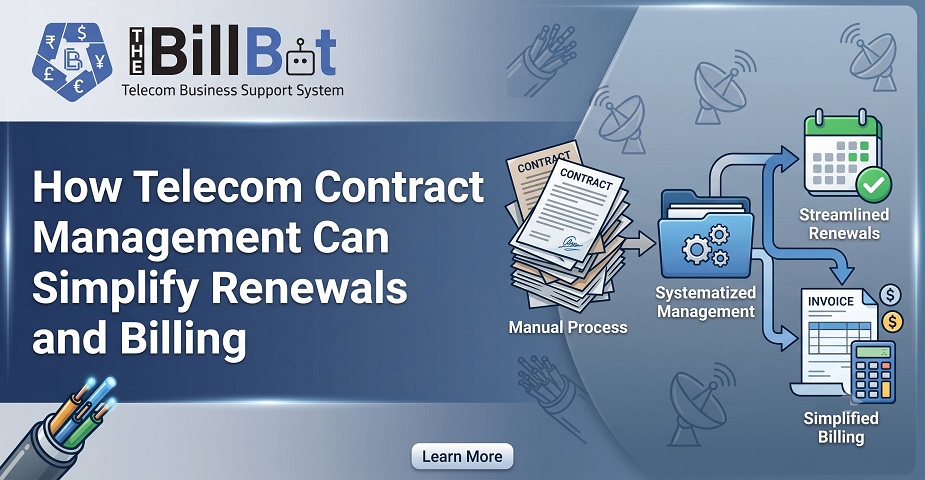
Table of Contents
- What Is Telecom Contract Management?
- Why Contract Renewals Can Become Difficult for Telecom Providers
- How Telecom Contract Management Simplifies Renewals
- 1. Centralised Contract Information
- 2. Renewal Date Tracking
- 3. Automated Renewal Notifications
- 4. Better Customer Communication
- How Telecom Contract Management Simplifies Billing
- Accurate Billing Terms
- Managing Contract-Based Pricing
- Supporting Billing Changes During Renewals
- The Role of Telecom Contract Automation
- Telecom Service Contract Management
- Benefits of Using Contract Renewal Software for Telecom
- Improved Visibility
- Fewer Missed Renewals
- Reduced Manual Work
- Better Billing Accuracy
- Better Customer Experience
- Stronger Internal Coordination
- What Should Telecom Providers Look for in Contract Management Software?
- Centralised Contract Records
- Contract Lifecycle Management
- Automated Alerts
- Billing Integration
- Customer and Service Visibility
- Reporting
- Access Control
- How Contract Management Supports Business Growth
- A More Connected Approach to Telecom Operations
- Conclusion
- Frequently Asked Questions
- 1. What is Telecom Contract Management?
- 2. How does Telecom Contract Management help with renewals?
- 3. Can Telecom Contract Management improve billing accuracy?
- 4. What is Telecom Contract Automation?
- 5. Why do telecom providers need contract renewal management?
- 6. What is Telecom Service Contract Management?
- 7. What is Contract Renewal Software for Telecom?
- 8. How does contract management connect with telecom billing?
Author : Bhargav
Published : 01 Oct 2026
Related Articles
Explore more insights

29 Sep 2026 / Bhargav
From Lead to Customer: Streamlining the Telecom Sales Process
28 Sep 2026 / Bhargav
How CRM Automation Can Improve Customer Management for ITSPs

26 Sep 2026 / Bhargav