For telecom providers, turning a potential lead into a paying customer involves much more than simply making a sales call. From the first enquiry to qualification, follow-ups, product selection, quotation, agreement, and onboarding, every stage needs to work together. A well-structured Telecom Sales Process helps providers manage these stages efficiently while giving sales teams better visibility into every opportunity. When sales activities are handled manually across spreadsheets, emails, phone calls, and disconnected systems, leads can easily be overlooked and follow-ups can become inconsistent. Modern telecom businesses are therefore focusing on Telecom Lead Management, CRM technology, and sales automation to create a smoother journey from lead to customer. According to current telecom CRM architectures, the selling journey can include lead management, opportunity management, product selection, quoting, contracts, and order capture before moving into fulfillment and activation. In this article, we’ll explore how telecom providers can streamline their sales journey and improve the way they manage prospects from the first interaction through conversion. The Telecom Sales Process is the structured series of activities a telecom provider follows to convert a potential prospect into a customer. Although the exact process differs between businesses, it commonly includes: Lead generation Lead capture Lead qualification Sales follow-up Customer needs assessment Product or service recommendation Quotation and proposal Negotiation Agreement or contract Order capture Customer onboarding Service activation The process can become particularly complex when providers sell multiple services such as voice, broadband, connectivity, SIP trunking, hosted communications, DID numbers, call plans, or managed IT services. A structured process ensures that sales representatives know what needs to happen at each stage and that important customer information remains accessible throughout the journey. The Telecom Sales Cycle often involves multiple products, pricing options, decision-makers, technical requirements, and follow-ups. For example, a business customer interested in a telecom service may first submit an enquiry. The sales team then needs to understand the customer's requirements, check service availability, recommend the right package, prepare pricing, answer questions, and follow up before the customer makes a decision. When these activities are managed manually, several problems can occur: Leads may not receive timely follow-ups. Sales representatives may lose track of opportunities. Customer information can become scattered. Sales managers may have limited pipeline visibility. Quotation and approval processes can take longer. Leads may be forgotten after the initial enquiry. A clearly defined Sales Process for Telecom Providers helps create consistency across these activities. The first step in improving the Telecom Sales Process is making sure every lead is captured and recorded. Leads may come from: Website enquiry forms Phone calls Email Social media Online campaigns Referral partners Existing customers Landing pages Sales representatives If this information is stored across different spreadsheets or inboxes, it becomes difficult to maintain an accurate view of potential customers. A centralized Telecom Lead Management system can bring these leads into one place. Sales teams can then access customer details, enquiry information, communication history, sales stage, and follow-up activities from a single system. Not every lead has the same potential. Some prospects may be actively looking for a telecom solution, while others may only be researching available options. Lead qualification helps sales teams identify where to focus their time. A qualification process can consider factors such as: Business size Required services Number of users Current provider Expected usage Budget Purchase timeframe Technical requirements Decision-making authority Modern telecom sales systems can support lead management and pre-sales recommendations based on customer needs. With proper qualification, sales representatives can prioritize meaningful opportunities instead of treating every enquiry identically. A clear sales pipeline makes it easier to understand where each prospect is in the buying journey. For example, a telecom sales pipeline might include: New Lead → Qualified → Contacted → Requirement Identified → Quote Sent → Negotiation → Won/Lost → Customer Each stage should have a clear purpose and defined next action. This helps sales representatives understand what they need to do next while allowing managers to monitor opportunities across the pipeline. A structured pipeline is especially useful when multiple sales representatives are handling a large number of leads. Follow-up is one of the most important parts of Telecom Lead Conversion. A prospect may not be ready to purchase immediately. They may need additional information, internal approval, pricing discussions, or technical clarification. Without an organized follow-up process, sales representatives may forget to contact prospects at the right time. Sales automation can help schedule: Follow-up calls Emails Reminders Tasks Quote follow-ups Renewal discussions Customer notifications Automation does not remove the need for human interaction. Instead, it helps sales teams reduce repetitive administrative work and maintain consistency. Telecom sales platforms increasingly combine lead management, sales workflows, automation, and pipeline visibility to support sales teams. Telecom providers often have a broad product and service portfolio. A prospect may need broadband, voice services, SIP trunking, business phone systems, or a combination of several services. The sales team needs to understand the customer's requirements before recommending a solution. A good Telecom Sales Process therefore connects customer information with product and pricing information. This makes it easier for sales representatives to provide relevant recommendations instead of manually searching through multiple systems. A telecom-focused CRM environment can connect customer information with product catalogs, pricing, quoting, and order management. Once a customer's requirements are understood, the next step is usually preparing a quotation or proposal. Manual quotation processes can slow down sales, especially when pricing depends on multiple services, packages, quantities, or contract terms. A streamlined process can help sales teams: Select products Apply pricing Create quotations Send proposals Track quotation status Follow up automatically Update customer records Faster and more organized quoting can reduce unnecessary delays between qualification and purchase. One of the biggest challenges in the Telecom Sales Process is the handoff between departments. For example: Sales → Customer Service → Billing → Provisioning → Technical Team If information has to be entered repeatedly into different systems, errors and delays can occur. A connected CRM and BSS environment can help maintain customer and order information across different stages. Modern telecom sales architectures are designed to connect customer-facing channels with product catalogs, supporting systems, order management, and fulfillment platforms. This creates greater continuity from the initial sales opportunity to service activation. Telecom CRM Software can provide sales teams with a centralized view of prospects, customers, interactions, opportunities, and sales activities. Instead of asking: Which leads are still waiting for a response? Which quotes are pending? Who needs a follow-up? Which opportunities are close to conversion? How many leads were converted this month? Sales managers can use dashboards and reports to monitor these activities more efficiently. CRM systems are also increasingly being used across the broader customer lifecycle, from contact management and sales through order management and billing. Telecom Sales Automation can reduce the amount of repetitive administrative work performed by sales teams. Common automation opportunities include: Automatic lead assignment Follow-up reminders Email notifications Lead status updates Task creation Quote reminders Sales reports Customer onboarding workflows For example, when a new lead enters the system, automation could assign it to the appropriate sales representative and create a follow-up task. This gives the sales representative a clear next step without requiring someone to manually manage every activity. The final stage should not be treated as the end of the sales process. Once a prospect agrees to purchase, important information needs to move smoothly into customer onboarding and fulfillment. The transition may involve: Lead → Opportunity → Quote → Contract → Order → Customer → Activation A structured workflow helps prevent information from being lost during this transition. Telecom sales platforms can support activities such as opportunity management, quoting, contracts, order capture, and subsequent fulfillment coordination. This creates a more connected lead to customer journey. A well-organized Telecom Sales Process can help providers improve operational consistency and sales visibility. Sales teams can organize, track, and prioritize leads more effectively. Automated reminders and workflows can help ensure prospects receive timely communication. Managers can monitor opportunities and understand where prospects are within the pipeline. Automation can handle repetitive tasks, allowing sales representatives to spend more time engaging with customers. A connected process makes it easier for customers to receive consistent information throughout their buying journey. When leads are captured, qualified, followed up, and nurtured systematically, sales teams have a structured framework for moving prospects toward conversion. Improving the sales process also requires measuring its performance. Telecom providers can monitor metrics such as: Number of new leads Lead qualification rate Lead response time Follow-up completion rate Quote-to-sale conversion rate Sales cycle length Lead-to-customer conversion rate Pipeline value Win/loss rate Revenue per customer Customer acquisition cost These metrics help businesses understand where prospects are progressing and where potential bottlenecks exist. For example, if a large number of leads are qualified but few become customers, the provider may need to examine its quotation, follow-up, pricing, or sales engagement process. For telecom providers, ITSPs, and MSPs, connecting sales activities with broader business operations can make the customer journey easier to manage. A platform such as The Bill Bot can help bring business processes together through CRM, billing, invoicing, payments, usage management, and reporting capabilities. The goal is to create a connected workflow where customer information can move more efficiently from acquisition through ongoing business operations. When sales, customer management, billing, and reporting are connected, businesses can reduce disconnected processes and gain better visibility into the customer lifecycle. A successful Telecom Sales Process is not simply about generating more leads. It is about creating a structured journey that moves prospects from their first interaction to becoming long-term customers. From Telecom Lead Management and qualification to CRM, follow-ups, quoting, automation, and onboarding, every stage plays an important role. The combination of Telecom CRM Software and Telecom Sales Automation can help providers organize sales activities, reduce repetitive work, improve pipeline visibility, and create a more consistent journey from lead to customer. For telecom providers looking to scale, the key is to connect the different stages of the sales journey instead of managing each activity separately. A streamlined process gives sales teams clearer workflows and gives businesses better visibility into how opportunities move through the pipeline. A Telecom Sales Process is the structured journey a telecom provider uses to move a prospect from initial enquiry through qualification, follow-up, quotation, agreement, order capture, and customer onboarding. Telecom Lead Management helps businesses capture, organize, qualify, assign, and track leads throughout the sales pipeline. It can reduce missed follow-ups and provide sales teams with better visibility into opportunities. Telecom providers can improve Telecom Lead Conversion by responding quickly, qualifying leads effectively, maintaining consistent follow-ups, providing relevant product recommendations, simplifying quotations, and tracking opportunities through a structured CRM pipeline. Telecom Sales Automation uses software and workflows to automate repetitive sales activities such as lead assignment, reminders, follow-ups, notifications, task creation, and reporting. Telecom CRM Software provides a centralized location for managing customer information, leads, opportunities, interactions, follow-ups, and sales activities. It can help teams maintain better visibility throughout the Telecom Sales Cycle. The Telecom Sales Cycle commonly includes lead generation, lead qualification, customer needs analysis, product recommendation, quotation, negotiation, agreement, order capture, onboarding, and service activation. Automation can help assign leads, schedule follow-ups, create tasks, send notifications, track sales stages, and maintain consistent workflows. This allows sales representatives to spend more time on customer engagement while routine activities are handled automatically. Connecting CRM with systems such as product catalogs, billing, order management, and fulfillment can reduce manual handoffs and help maintain consistent customer information throughout the sales and service journey. Telecom Sales refers broadly to selling telecommunications products and services. The Telecom Sales Process refers to the structured steps used to manage those sales, from lead generation through customer conversion and onboarding. The goal is to create a clear, consistent, and connected journey from the first customer interaction to conversion and onboarding while improving visibility, reducing unnecessary manual work, and supporting efficient sales operations.What Is the Telecom Sales Process?
Why the Telecom Sales Cycle Can Be Complex
1. Capture Every Lead in One Place
2. Qualify Leads Before Spending Sales Time
3. Create a Clear Sales Pipeline
4. Make Follow-Ups Consistent
5. Connect Customer Needs With the Right Product
6. Simplify Quotes and Proposals
7. Reduce Manual Handoffs
8. Use Telecom CRM Software for Better Visibility
9. Automate Repetitive Sales Activities
10. Make the Lead-to-Customer Transition Smooth
How a Streamlined Telecom Sales Process Benefits Providers
Better Lead Management
Faster Follow-Ups
Improved Sales Visibility
Reduced Administrative Work
Better Customer Experience
Stronger Lead Conversion
Key Metrics to Track in Telecom Sales
How The Bill Bot Can Support a More Connected Sales Workflow
Final Thoughts
Frequently Asked Questions
1. What is a Telecom Sales Process?
2. Why is Telecom Lead Management important?
3. How can telecom providers improve lead conversion?
4. What is Telecom Sales Automation?
5. How does Telecom CRM Software help sales teams?
6. What are the main stages of the Telecom Sales Cycle?
7. How can automation support the lead-to-customer journey?
8. Why should telecom providers connect CRM with other business systems?
9. What is the difference between Telecom Sales and Telecom Sales Process?
10. What is the goal of a streamlined Telecom Sales Process?
 Book a Demo
From Lead to Customer: Streamlining the Telecom Sales Process
Bhargav
Sep 29, 2026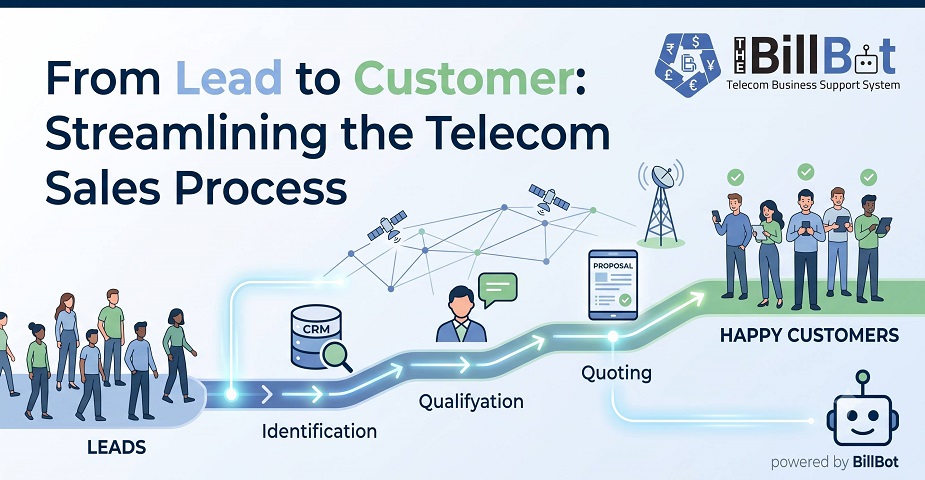
Table of Contents
- What Is the Telecom Sales Process?
- Why the Telecom Sales Cycle Can Be Complex
- 1. Capture Every Lead in One Place
- 2. Qualify Leads Before Spending Sales Time
- 3. Create a Clear Sales Pipeline
- 4. Make Follow-Ups Consistent
- 5. Connect Customer Needs With the Right Product
- 6. Simplify Quotes and Proposals
- 7. Reduce Manual Handoffs
- 8. Use Telecom CRM Software for Better Visibility
- 9. Automate Repetitive Sales Activities
- 10. Make the Lead-to-Customer Transition Smooth
- How a Streamlined Telecom Sales Process Benefits Providers
- Better Lead Management
- Faster Follow-Ups
- Improved Sales Visibility
- Reduced Administrative Work
- Better Customer Experience
- Stronger Lead Conversion
- Key Metrics to Track in Telecom Sales
- How The Bill Bot Can Support a More Connected Sales Workflow
- Final Thoughts
- Frequently Asked Questions
- 1. What is a Telecom Sales Process?
- 2. Why is Telecom Lead Management important?
- 3. How can telecom providers improve lead conversion?
- 4. What is Telecom Sales Automation?
- 5. How does Telecom CRM Software help sales teams?
- 6. What are the main stages of the Telecom Sales Cycle?
- 7. How can automation support the lead-to-customer journey?
- 8. Why should telecom providers connect CRM with other business systems?
- 9. What is the difference between Telecom Sales and Telecom Sales Process?
- 10. What is the goal of a streamlined Telecom Sales Process?
Author : Bhargav
Published : 29 Sep 2026
Related Articles
Explore more insights
28 Sep 2026 / Bhargav
How CRM Automation Can Improve Customer Management for ITSPs

26 Sep 2026 / Bhargav
How a Telecom BSS Can Streamline Operations for ITSPs and MSPs

25 Sep 2026 / Bhargav