Telecom providers today are expected to offer more services while keeping pricing simple, billing accurate, and customer experiences smooth. A provider may sell voice services, broadband, DID numbers, calling plans, extensions, mobile services, messaging, add-ons, and other communication solutions. Managing each service separately can quickly create operational complexity.
This is where Telecom Product Bundling becomes valuable.
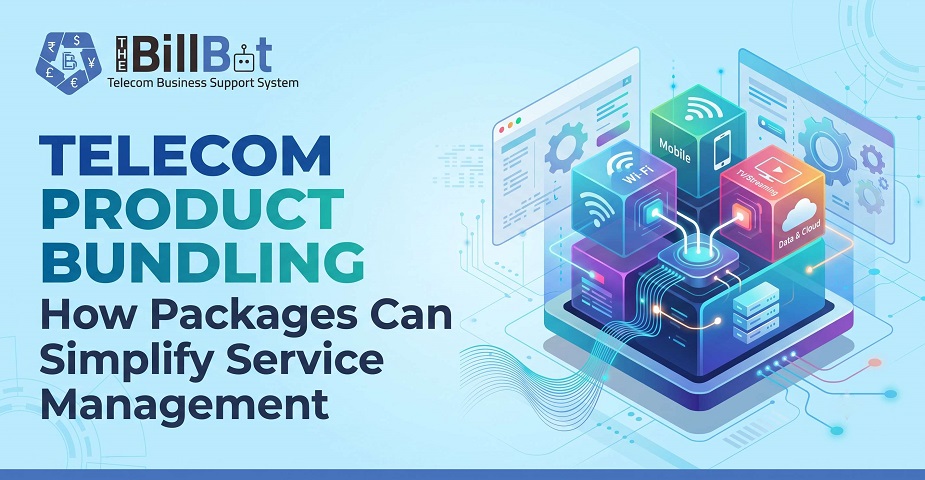
Instead of selling and managing every service as an independent product, providers can combine related products into structured packages. A customer might purchase broadband with voice service, a business communication package with multiple extensions, or a connectivity plan with additional calling features.
For telecom providers, bundling is not simply a marketing strategy. When supported by the right systems, it can simplify product management, customer management, billing, invoicing, and service administration.
Modern BSS platforms increasingly support product catalogues, pricing, ordering, subscriptions, billing, and service lifecycle management, making it easier for providers to create and manage complex offers from a central environment.
What Is Telecom Product Bundling?
Telecom Product Bundling is the practice of combining two or more telecom products or services into a single package or commercial offering.
For example, instead of selling:
Broadband separately
Voice service separately
DID numbers separately
Calling minutes separately
a provider could create a business communication package that includes all of them under one offer.
The package can have its own price, billing cycle, usage allowances, discounts, service rules, and eligibility requirements.
A bundle can also include recurring charges, usage-based charges, discounts, and other commercial components. Telecom billing platforms commonly model these components as part of a broader product or offer structure.
The goal is simple: make complex services easier to sell, purchase, manage, and bill.
Why Are Telecom Service Packages Becoming Important?
Telecom providers are managing increasingly diverse portfolios. Customers often want a complete solution instead of purchasing multiple services through separate processes.
For example, a business customer may need:
Internet connectivity
Business voice
Multiple extensions
DID numbers
Calling plans
Additional minutes
Managed services
Managing these as completely separate subscriptions can create unnecessary work for both the provider and the customer.
A well-designed bundle brings related services together.
Real-world telecom offerings demonstrate this approach. For example, bundled plans can combine multiple services under one account and provide consolidated billing and service management.
For providers, the advantages can extend beyond convenience. Bundling can create a more structured way to manage products, pricing, subscriptions, billing, and customer relationships.
How Product Bundling for Telecom Simplifies Service Management
1. Makes Complex Services Easier to Manage
Without a structured package, each product may have its own pricing, billing cycle, usage rules, and customer configuration.
This creates more records to maintain and more processes for staff to manage.
With Product Bundling for Telecom, multiple related services can be grouped under a defined package.
For example:
Business Voice Package
10 Extensions
5 DID Numbers
Unlimited Internal Calls
Monthly Calling Allowance
Voicemail
Business Support
Instead of managing every element independently, the provider can manage the commercial package as one customer offering while still tracking the individual services within it.
2. Simplifies Product and Package Management
As a telecom business grows, the number of products and pricing combinations can increase rapidly.
Creating individual offers for every possible combination can become difficult to maintain.
Telecom Package Management provides a more structured approach.
Providers can create standardized packages based on customer requirements, such as:
Starter Package
Business Package
Professional Package
Enterprise Package
Custom Communication Package
Each package can have defined products, pricing, usage limits, discounts, and billing rules.
This makes it easier for internal teams to understand what each package includes and how it should be managed.
3. Creates More Consistent Billing
Billing becomes complicated when customers have multiple independent products.
A customer might receive separate charges for broadband, voice, numbers, add-ons, and usage.
A properly configured bundle can bring these charges into a more organized billing structure.
Telecom Billing Packages can define recurring fees, usage-based charges, discounts, taxes, allowances, and other billing components.
This can reduce manual calculations and make invoices easier to understand.
Modern billing systems can support different charging models and bundle configurations, including recurring and usage-related charges.
4. Improves the Customer Experience
Customers generally do not want to manage complicated product structures.
They want to know three things:
What am I getting?
How much does it cost?
How do I manage it?
A clear package answers these questions more effectively than a long list of individual services.
Instead of asking a customer to choose five different services, a provider can present a complete package with clear pricing and benefits.
This makes the buying process easier and can also make ongoing account management more straightforward.
5. Makes Upgrades and Add-Ons Easier
Customers' requirements change over time.
A small business may start with a basic package and later require more users, additional numbers, higher bandwidth, or more calling capacity.
A flexible bundling structure allows providers to create upgrade paths.
For example:
Starter → Business → Professional → Enterprise
Providers can also offer add-ons such as:
Additional DID numbers
Extra extensions
International calling
Additional data
Premium support
Extra usage allowances
This creates a structured way to expand the customer's service portfolio without rebuilding the entire account.
The Role of Telecom Product Management
Telecom Product Management is essential when a provider has a large and growing service portfolio.
Product teams need to understand:
What products are available
Which products can be bundled
What each package includes
How products are priced
Which discounts apply
What billing cycle should be used
Which services depend on other services
How customers can upgrade or downgrade
A centralized product catalog can help maintain this information consistently.
Modern BSS architectures commonly include product catalog and product-offer capabilities that define product attributes, pricing, and commercial offerings.
This means a provider can create reusable products and combine them into different packages instead of creating every offer from scratch.
How Telecom Billing Software Supports Bundling
Bundling works best when the billing system understands the relationship between products and packages.
Telecom Billing Software can help manage:
Recurring subscription charges
Usage-based charges
One-time charges
Discounts
Taxes
Billing cycles
Proration
Usage allowances
Invoice generation
Payment tracking
For example, suppose a customer purchases a package for £100 per month that includes broadband, voice service, and a defined calling allowance.
The billing system should be able to recognize the package, apply the correct recurring charge, calculate additional usage where applicable, apply discounts or taxes, and produce the appropriate invoice.
This reduces the need for manual billing calculations.
How Telecom BSS Software Connects the Entire Process
A major advantage of using Telecom BSS Software is that product bundling does not have to operate as an isolated process.
A BSS can connect multiple commercial processes, including:
Product → Package → Customer → Subscription → Usage → Billing → Invoice → Payment → Reporting
This creates a more connected operational workflow.
For example, when a customer selects a package, the system can create the relevant subscription, associate the included services, apply pricing rules, process usage, generate invoices, and update customer records.
BSS platforms are designed to connect business processes such as product management, customer management, billing, ordering, and revenue-related operations.
Key Benefits of Telecom Bundling Solutions
A well-designed Telecom Bundling Solutions strategy can provide several benefits.
Operational Efficiency
Employees spend less time creating and maintaining individual service configurations.
Simplified Billing
Multiple services can be managed through structured package billing rather than disconnected billing processes.
Better Customer Visibility
Customer-facing teams can quickly see which packages and services a customer has subscribed to.
Faster Product Launches
Reusable products can be combined into new offers without redesigning every underlying service.
Easier Upselling
Providers can create upgrade paths and additional services around existing packages.
Better Revenue Opportunities
Bundles can encourage customers to purchase multiple services instead of selecting only one.
Improved Scalability
A structured product catalog makes it easier to manage a growing portfolio of products and packages.
Telecom Service Management and Automation
Telecom Service Management becomes significantly easier when product relationships and package rules are clearly defined.
Automation can help providers manage activities such as:
Customer onboarding
Package activation
Service provisioning
Billing cycle processing
Invoice generation
Payment reminders
Usage processing
Package upgrades
Service changes
Reporting
This is particularly important for ITSPs, VoIP providers, MSPs, and other communications businesses that manage many customers and recurring services.
Rather than relying on spreadsheets or manual updates, automation allows predefined rules to control repetitive processes.
What Should a Telecom Product Bundle Include?
There is no single formula for creating the perfect bundle. The package should reflect the provider's target customers and service model.
However, a strong package should clearly define:
Products
What services are included?
Pricing
What does the customer pay?
Billing Cycle
Is the package billed monthly, annually, or according to another cycle?
Usage
Are there included minutes, data allowances, or other usage limits?
Discounts
Does the bundle provide a package discount?
Add-Ons
Can customers purchase additional services?
Eligibility
Which customers can subscribe?
Upgrade Rules
What happens when the customer needs more capacity?
Cancellation Rules
What happens when the customer removes a service or ends the package?
Clearly defining these elements reduces confusion for both customers and internal teams.
Best Practices for Telecom Product Bundling
Keep Packages Customer-Focused
Do not create bundles simply because multiple products can technically be combined. Build packages around actual customer needs.
Use Reusable Products
Create individual products that can be reused across multiple packages. This makes the product catalog easier to maintain.
Keep Pricing Transparent
Customers should understand what is included, what is recurring, and what may result in additional charges.
Plan for Flexibility
Allow customers to add, remove, or upgrade services where appropriate.
Connect Bundling With Billing
The package structure should match the billing configuration to prevent invoice errors.
Automate Repetitive Processes
Use automation for subscription creation, billing, invoicing, reminders, and reporting wherever possible.
Monitor Package Performance
Track customer adoption, revenue, usage, upgrades, cancellations, and profitability to understand which packages are actually working.
Telecom Product Bundling: A Smarter Way to Scale
As telecom providers expand their product portfolios, managing individual services independently can become increasingly difficult.
Telecom Product Bundling provides a practical way to organize related services into clear, manageable packages. When combined with centralized product management, automated billing, customer management, and BSS capabilities, bundling can simplify operations across the entire customer lifecycle.
The real value is not simply putting several products together.
It is creating a connected structure where products, pricing, subscriptions, usage, billing, invoices, payments, and customer information work together.
For growing telecom businesses, this can mean fewer manual processes, clearer packages, more consistent billing, and a better customer experience.
With the right Telecom Billing Software, Telecom BSS Software, and Telecom Service Management Software, providers can turn complex service portfolios into simpler, more scalable business operations.
Frequently Asked Questions
1. What is Telecom Product Bundling?
Telecom Product Bundling is the practice of combining multiple telecom products or services into a single package. The package can have defined pricing, billing rules, usage allowances, discounts, and service configurations.
2. What are Telecom Service Packages?
Telecom Service Packages are predefined combinations of services offered together under a single commercial offer. They may include voice, broadband, DID numbers, extensions, calling plans, data, or other communication services.
3. How does Product Bundling for Telecom help providers?
Product Bundling for Telecom can simplify product management, customer onboarding, billing, invoicing, service administration, and upgrades by organizing multiple services into structured packages.
4. Can telecom bundles include usage-based billing?
Yes. A package can combine recurring charges with usage-based charges. For example, a monthly subscription may include a defined number of minutes, with additional usage charged separately.
5. How does Telecom Billing Software support product bundles?
Telecom Billing Software can apply package pricing, recurring charges, usage charges, discounts, taxes, billing cycles, and other rules to help generate accurate invoices.
6. Why is Telecom BSS Software important for bundling?
Telecom BSS Software can connect product management, customer management, ordering, subscriptions, billing, invoicing, payments, and reporting, creating a more integrated process for managing bundled services.
7. What is Telecom Package Management?
Telecom Package Management involves creating, configuring, pricing, maintaining, and updating packages that contain multiple telecom products or services.
8. Can customers upgrade a telecom package?
Yes. Depending on the provider's rules and system capabilities, customers can move to higher packages, add services, increase usage allowances, or purchase additional features.
9. What is the difference between a product and a telecom package?
A product is an individual service or offering, while a package combines multiple products or service components into a single commercial offer.
10. How can telecom providers automate service management?
Providers can use Telecom Service Management Software and BSS platforms to automate processes such as customer onboarding, subscription management, service changes, usage processing, billing, invoicing, payment reminders, and reporting.