Customer expectations in the telecom industry have changed significantly. Customers no longer want to contact their service providers for every small request, wait for billing updates or depend on support teams to access basic account information. They expect quick answers, transparent billing and the convenience of managing their services whenever they need to.
For telecom providers, meeting these expectations requires more than simply offering reliable connectivity. Businesses must also provide a smooth and convenient customer experience throughout the customer journey.
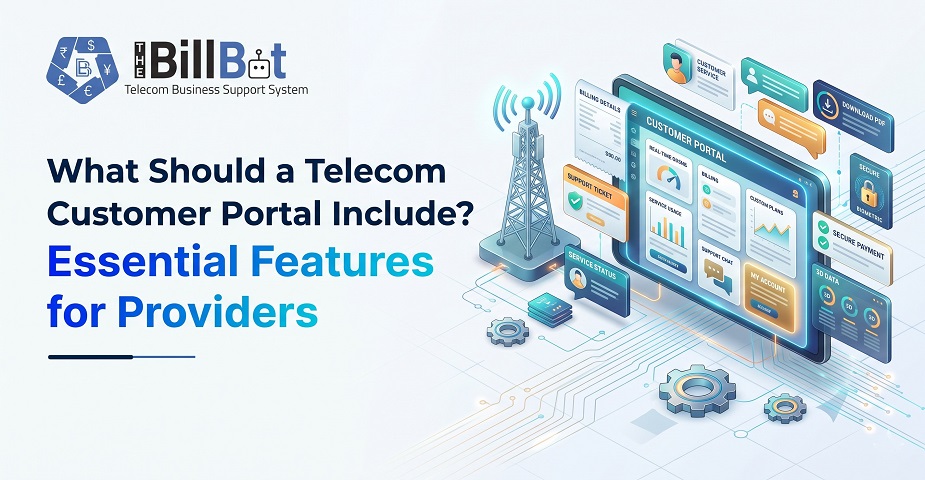
This is where a Telecom Customer Portal becomes valuable. It gives customers a central online space where they can view their accounts, check invoices, monitor usage, make payments, raise support requests and manage their subscribed services.
For Internet Telephony Service Providers (ITSPs), VoIP providers, Managed Service Providers (MSPs) and other telecom businesses, a well-designed customer portal can reduce repetitive administrative work while improving customer satisfaction.
But what should a telecom customer portal actually include? Let's explore the essential features that providers should consider when building or choosing the right solution.
What Is a Telecom Customer Portal?
A Telecom Customer Portal is an online platform that allows customers to access and manage their telecom accounts and services through a single interface.
Instead of contacting the provider for every account-related question, customers can log in and find the information they need independently.
Depending on the provider's business model, the portal may offer access to:
Customer account information and profile details.
Active subscriptions and service packages.
Invoices, billing history and payment records.
Real-time or updated usage information.
Payment options and outstanding balances.
Support tickets and service requests.
Contract information and renewal dates.
Notifications, announcements and account updates.
A Customer Portal for Telecom Providers should connect different business operations in one place. It should not simply display information; it should allow customers to complete useful activities without unnecessary communication with the provider.
For telecom businesses managing multiple customers, services and billing arrangements, this creates a more organised approach to customer management.
Why Do Telecom Providers Need a Customer Portal?
Managing customer relationships manually becomes increasingly difficult as a telecom business grows. Customer enquiries, invoice requests, payment confirmations, usage questions and service updates can consume considerable time.
A dedicated portal helps providers address these challenges while creating a more professional customer experience.
Here are some important reasons to implement one.
1. Reduce Repetitive Customer Enquiries
Customers frequently contact support teams to request invoices, check payment statuses, confirm package details or ask about their usage.
A self-service portal allows them to find this information independently. This reduces repetitive enquiries and gives support employees more time to handle complex issues.
2. Improve Billing Transparency
Billing-related confusion can affect customer trust. When customers cannot easily access their invoices or understand their charges, they are more likely to contact the provider.
A centralised billing section gives customers access to invoice details, payment history, outstanding amounts and billing information.
3. Improve Customer Experience
Customers appreciate having control over their accounts. They should not have to wait for business hours to access basic information or submit simple requests.
A well-designed Telecom Self-Service Portal makes account management more convenient and accessible.
4. Support Business Growth
As a telecom provider expands, the number of customers, subscriptions and service requests also increases.
A scalable portal helps businesses manage this growth without relying entirely on manual processes.
7 Essential Telecom Customer Portal Features Every Provider Should Consider
Not every customer portal needs the same functionality. However, certain features are particularly important for telecom businesses that want to improve customer experience and simplify daily operations.
Let's look at the key features in detail.
1. Customer Account Management
Customer account management should be one of the main components of any telecom customer portal.
Customers need a convenient way to view and update their account information without contacting the provider for every minor change.
Essential capabilities should include:
Customer profile and contact information.
Company and billing details.
Account identification and service information.
Password management and secure login.
Multiple user access where required.
Account status and subscription details.
For business telecom providers, multiple users may need access to the same customer account. For example, an IT manager may need service information, while the finance department needs invoices and payment records.
Role-based access allows providers to give different users appropriate permissions.
Effective Customer Account Management helps keep customer information organised and makes account administration more efficient.
2. Invoice Management and Billing History
Billing is one of the most important areas of a telecom customer portal.
Customers should be able to access their invoices whenever required rather than requesting copies from the finance department.
A useful Telecom Billing Portal should include:
Current and previous invoices.
Invoice numbers and billing dates.
Invoice due dates.
Outstanding and paid amounts.
Downloadable PDF invoices.
Tax and charge breakdowns.
Credit notes and payment records.
For providers offering VoIP, DID numbers, broadband, call plans or other telecom services, billing can involve several different charges.
A clear invoice presentation helps customers understand what they are paying for and reduces billing-related confusion.
Integration with reliable Telecom Billing Software can make this process more efficient by connecting invoice generation, account information and payment records.
3. Real-Time Usage Monitoring
Usage visibility is another important feature, particularly for telecom providers offering usage-based services.
Customers want to understand how much of their service they are using and whether their usage is within their expected limits.
A customer portal can provide information such as:
Call usage and call duration.
Data consumption.
SMS usage, where applicable.
Remaining allowances or included minutes.
Usage charges.
Historical usage reports.
Service-wise consumption.
For VoIP providers, customers may also benefit from access to call detail records (CDRs), where appropriate permissions and privacy controls are in place.
Usage information should be presented through simple dashboards, summaries and downloadable reports.
This improves transparency and helps customers make better decisions about their telecom services.
4. Online Payment and Payment History
Customers should be able to settle outstanding invoices through a convenient and secure payment process.
An effective online customer portal should support:
Online invoice payments.
Secure payment gateway integration.
Payment confirmation.
Payment history.
Outstanding balance visibility.
Receipts and transaction references.
Payment status updates.
Where supported, providers can also offer automatic payment options for recurring invoices.
Payment reminders and notifications can help customers avoid missed due dates.
For telecom businesses, integrating payment functionality with billing systems also helps reduce manual reconciliation and makes it easier to track incoming payments.
Payment security is essential. Providers should use trusted payment gateways and avoid exposing sensitive payment information.
5. Service and Subscription Management
Telecom customers often subscribe to multiple services under one account.
For example, a business customer may use VoIP extensions, DID numbers, broadband connections, call plans and additional communication services.
A good customer portal should allow customers to view their active services and understand what they have subscribed to.
Important capabilities include:
Active and inactive service listings.
Service package details.
Subscription information.
Service activation status.
Plan and package details.
Upgrade or downgrade requests.
New service requests.
Contract and renewal information.
These Telecom Service Management capabilities make it easier for customers to understand their subscriptions.
Providers can also use the portal to streamline service-related requests and reduce communication gaps between customers and internal teams.
6. Support Tickets and Service Requests
Customer support is an essential part of the telecom experience.
When customers experience service interruptions, billing concerns or technical problems, they need a straightforward way to contact their provider.
A customer portal should include a ticket management system with features such as:
Create new support tickets.
Select enquiry or issue categories.
Add descriptions and attachments.
Track ticket status.
View previous support requests.
Receive updates from support teams.
Access ticket communication history.
Customers should be able to see whether a request is open, in progress, waiting for information or resolved.
This makes the support process more transparent and helps customers understand what is happening with their enquiries.
For providers, centralised ticket management creates a structured way to handle customer issues and monitor support activity.
7. Notifications, Alerts and Announcements
Customers should receive important updates about their accounts and services without having to log in repeatedly.
A notification system helps providers communicate important information at the right time.
Useful notifications include:
New invoice generated.
Upcoming payment due dates.
Successful payment confirmation.
Overdue payment reminders.
Service activation updates.
Contract renewal reminders.
Usage threshold alerts.
Support ticket updates.
Planned maintenance announcements.
Notifications can be delivered through email, SMS or in-portal alerts, depending on the provider's communication setup.
A well-planned notification system helps customers stay informed and reduces the need for manual follow-ups.
Additional Features That Make a Telecom Customer Portal More Effective
Beyond the seven essential features, telecom providers should consider additional capabilities that make their portals more useful, secure and convenient.
8. Contract and Renewal Management
Contract management is important for telecom providers handling business customers with different agreements, service terms and renewal dates.
Customers should be able to view their contract information, including:
Contract start and end dates.
Agreed service terms.
Subscription commitments.
Renewal dates.
Contract documents.
Renewal and cancellation requests.
Automated reminders can help customers and providers prepare for upcoming renewals and avoid missed deadlines.
9. Reports and Account Insights
Customers should have access to useful information about their accounts and service activity.
A reporting section can provide:
Monthly billing summaries.
Payment and outstanding balance reports.
Service usage reports.
Historical invoices.
Subscription summaries.
Downloadable account statements.
Clear reports make it easier for business customers to monitor telecom expenses and manage their budgets.
10. Mobile-Friendly and Easy-to-Use Interface
A customer portal should be simple to navigate across desktops, tablets and smartphones.
Customers may need to check invoices, make payments or raise support requests while away from their offices.
A responsive interface should provide:
Simple navigation.
Clear dashboard layouts.
Easy-to-find account information.
Mobile-friendly invoice viewing.
Accessible payment options.
Consistent performance across devices.
An easy-to-use interface encourages customers to use the portal regularly and reduces unnecessary support requests.
How to Choose the Right Telecom Customer Portal for Your Business
Choosing the right portal involves understanding your business requirements, customer expectations and existing operational processes.
Here are some important considerations before selecting a solution.
Understand Your Business Model
Different telecom providers have different requirements.
A VoIP provider may prioritise call usage, CDRs and DID management, while an MSP may need customer account management, subscription information and service request tracking.
Choose a solution that supports your services and billing structure.
Look for Integration Capabilities
A customer portal should work alongside your existing business systems.
Consider integration with:
Telecom billing platforms.
CRM systems.
PBX platforms.
Payment gateways.
Accounting software.
Support and ticketing systems.
Good integration reduces duplicate data entry and helps maintain consistency across business operations.
Prioritise Security and Data Protection
Customer portals handle sensitive information, including personal details, invoices, payment records and service information.
Important security capabilities include secure authentication, role-based permissions, encrypted communication, access controls and appropriate data protection practices.
Providers should also ensure that their portal supports relevant regulatory and privacy requirements.
Consider Scalability and Customisation
Your customer portal should be able to support business growth.
As your customer base expands, the platform should continue handling increasing numbers of accounts, services, invoices and transactions.
Customisation is equally important. Providers should be able to configure portal functionality, branding, customer permissions and service-related workflows according to their business requirements.
How The Bill Bot Helps Telecom Providers Simplify Customer Management
Managing customer accounts, billing activities, services and business operations through disconnected systems can create unnecessary complexity.
The Bill Bot provides a Business Support System (BSS) designed to help VoIP providers, ITSPs and MSPs manage important business operations through one platform.
With capabilities covering billing, customer management, automation, reporting and integrations, businesses can simplify their operational workflows and improve the way they manage customer relationships.
The platform supports key business activities such as:
Customer Management: Organise customer information and manage customer-related activities.
Smart Billing: Simplify billing processes and manage different billing requirements.
CDR Processing: Process call detail records for telecom billing and usage management.
Payment Management: Support payment tracking and collection workflows.
Reports and Analytics: Access business information to understand billing and operational performance.
Integrations: Connect business systems to support more efficient workflows.
By bringing essential business operations together, The Bill Bot helps telecom providers reduce manual work, improve operational visibility and build a more organised customer management process.
Explore The Bill Bot to learn more about its telecom business support capabilities.
Common Mistakes to Avoid When Building a Telecom Customer Portal
Even a feature-rich portal can create a poor customer experience if it is not designed properly.
Here are some common mistakes providers should avoid.
1. Making the interface complicated: Too many menus and unnecessary steps can make it difficult for customers to find basic information.
2. Providing outdated information: Billing, payment and service information should be synchronised with the relevant business systems.
3. Ignoring mobile users: A portal that works only on desktops limits accessibility and convenience.
4. Overlooking security: Weak authentication and poor access controls can expose sensitive customer information.
5. Offering limited self-service options: If customers still need to contact support for routine activities, the portal is not delivering its full value.
6. Ignoring customer feedback: Regular feedback helps providers identify usability problems and improve portal functionality.
A successful portal should be continuously reviewed and improved as customer expectations and business requirements change.
Conclusion
A well-designed Telecom Customer Portal is an important part of modern telecom business operations. It provides customers with a convenient way to manage accounts, access invoices, monitor usage, make payments and communicate with service providers.
Features such as customer account management, billing history, online payments, service management, support tickets and notifications can significantly improve the customer experience.
However, simply adding more features does not guarantee success. The portal should be easy to use, secure, responsive and properly integrated with the provider's existing systems.
For VoIP providers, ITSPs and MSPs, investing in the right customer management and billing capabilities can help reduce administrative work, improve transparency and support long-term business growth.
The goal is simple: give customers more control over their services while helping your business operate more efficiently.
Frequently Asked Questions (FAQs)
1. What is a Telecom Customer Portal?
A Telecom Customer Portal is an online platform that allows telecom customers to manage their accounts, view invoices, monitor usage, make payments, access services and raise support requests through a centralised interface.
2. What are the most important Telecom Customer Portal Features?
The most important features include customer account management, invoice access, billing history, online payments, usage monitoring, service management, support tickets and automated notifications.
3. How does a Telecom Self-Service Portal benefit customers?
A Telecom Self-Service Portal allows customers to complete routine account activities independently. They can check invoices, view usage, make payments and submit service requests without contacting customer support for every enquiry.
4. Why do Telecom Providers need an Online Customer Portal?
An Online Customer Portal improves customer convenience, increases billing transparency, reduces repetitive support enquiries and provides customers with easier access to their services and account information.
5. Can a Telecom Billing Portal support online payments?
Yes. A Telecom Billing Portal can integrate with secure payment gateways, allowing customers to pay outstanding invoices, view transaction history and access payment confirmations.
6. How does a customer portal improve Telecom Customer Management?
It centralises customer information, service details, billing records and support requests. This helps providers organise customer activities, reduce manual administration and maintain better visibility of customer relationships.
7. Should a Telecom Customer Portal be mobile-friendly?
Yes. A mobile-friendly portal allows customers to access their accounts, view invoices, make payments and submit support requests from smartphones and tablets.
8. Can a Telecom Customer Portal integrate with billing and CRM systems?
Yes. Integration with telecom billing software, CRM platforms, PBX systems, payment gateways and accounting applications can help providers maintain consistent information and streamline business workflows.
9. Is a Telecom Customer Portal suitable for small telecom providers?
Yes. Small telecom providers can benefit from customer self-service, automated billing access and centralised account management. A scalable solution can also support their requirements as the business grows.
10. How can telecom providers improve their customer portal?
Providers can improve their portals by simplifying navigation, adding useful self-service features, improving mobile accessibility, integrating business systems, maintaining accurate information and regularly collecting customer feedback.